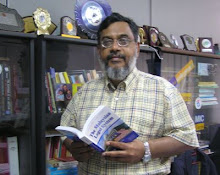
By Datuk Dr Denison Jayasooria
Malaysia is well known for the multi ethnic, multi religious, multi cultural and multi lingual nature of Malaysian society.
These diversities reflect the rich Malaysian heritage. It provides unique opportunities for community harmony but at the same time there are challenges which require greater attention to addressing differences with understanding.
FEDERAL/ STATE CONSTITUTIONS & RELIGIOUS FREEDOM
While the Federal Constitution establishes fundamental principles regarding religious freedom and the position of Islam however the Constitution does not provide for a “pan-Malaysian head of Islam” (Suffian, pg 246)
Islam is the subject of the respective states and the respective State Rulers and in the case of Penang and Malacca and the Federal Territory the Yang Dipertuan Agung is the head. Therefore differing State legislations pertaining to the administration of Islam in Malaysia will is complicated.
The Federal Constitution protects the freedom of religion in Malaysia indicated in Article 3 that “Islam is the religion of the Federation but other religions may be practised in peace and harmony”.
Article 11 further clarifies religious freedom namely in sub clause (1) that “every person has the right to profess and practice his religion, subject to clause (4), to propagate it”
In addition in sub clause (3) the Constitution states that each religious group has the right to manage their own religious affairs as well as to establish and maintain institutions for religious and charitable purposes.
In article 12 (2) each religious groups has the right to establish and maintain their own educational institutions
Article 12 (3) & 12 (4) protects individuals from any forced situation to practice another religion and that the religion of a person under 18 years of age is decided by the parents
While there is religious freedom there are also restrictions such as Article 3 (1) that the practice of religion must not disturb peace and harmony. Also emphasized in Article 11(5) on public order, public health or morality. Furthermore the propagation to Muslims is restricted as in clause 11 (4)
With specific reference on this matter Prof Shad Faruqi indicates that “in the Malay mind the words Islam and Malay are often used interchangeably. In Malay society there is a fascinating and unique connection between race and religion. The defining characteristic of a Malay is that he is a Muslim. Any attempt to weaken a Malay’s religious faith is, therefore, perceived as an indirect attempt to erode Malay power” (page 333)
Furthermore Article 160 (2) defines a Malay to mean “a person who professes the religion of Islam, habitually speaks the Malay language, conforms to Malay custom”.
CURRENT PRACTICE OF RELIGIOUS FREEDOM
The visibility of the liberal policy is evident in Malaysian society, for example through the numerous places of worship (mosques, temples, churches and gurudwaras).
Islamic institutions and infrastructure is fully funded through federal and state government funds. Allocations are also made to non Islamic places of worship and institutions especially educational and social institutions.
All the main religious festival dates are national holidays.
Major religious/cultural festivals for example Hari Raya, Christmas, Chinese New Year and Deepavali (Indian light overcoming darkness celebration), there is an official national celebration officiated by the Malaysian King.
CONTEMPORARY ISSUES & IMPLICATIONS FOR ETHNIC RELATIONS
There are however complaints from non Muslim religious leaders especially on matters pertaining to conversions and demolitions of places of worship. In addition the use of Arabic words such as ‘Allah’ in reference to God cannot be used by other religious groups except Muslims. This has become very sensitive issues and subject to judicial review on usage as Malaysian Christians especially the natives of Sabah and Sarawak have been using the Malay language Bible.
Sections of the Muslim community have complained over the moral policing role of Muslim religious enforcement officials. Examples of these are the most recent two fatwas issued by the National Fatwa Council in late 2008 namely the banning of tomboys and the other on yoga due a tremendous outcry both from Islamic groups and general non Muslim public.
EXAMPLES OF COMPLICATED CASES IMPACTING ETHNIC RELATIONS
A number of cases are cited as sample issues faced by sections of the Malaysian community. These cases have drawn much public interest and subject to many discussions and forums including civil society action such as protest and demonstrations. Furthermore they are subject to judicial review but they have tremendous implications and impact on ethnic relations in Malaysian society.
Shamala Sathiyaseelan v Dr Jeyaganesh C Mogarajah
This couple were married according to Hindu rites and registered under the Law Reform (Marriage & Divorce) Act 1976. The husband converted to Islam together with his two infants without the consent of the Hindu mother. The civil court held that based on article 121(1A) the Syariah Court was the qualified forum to determine the status of the two children.
However the complication is that she is a non Muslim and that the Syariah Court was not the proper court for her. On this matter, Prof Faruqi states “with due respect, if one of the parties to a case is a non-Muslim and outside the jurisdiction of the Syariah Court, then in the interest of equal justice for all, the civil courts must not deny jurisdiction” (page 360).
Death of Maniam Moorthy (Mohammad Abdullah)
The dilemma of a widow to bury her husband whom she claimed was a practicing Hindu sowed the seeds for a major uprising of the Hindu community. It was claimed that Moorthy a former soldier had converted to Islam in 2004 without informing his wife or family, however due to illness he died in 2005. The widow was prevented from burying him after the Syariah court ruled that he had converted to Islam. The widow filed an application in the High Court but on December 29 it rejected her application on grounds that it had no jurisdiction over the matter.
The amendments to the Constitution Article 121 (1A) in 1988 protected the jurisdiction of the Syariah court from interference from civil. However it did not clarify who has the power to determine whether the matter is within or outside the jurisdiction of the Syariah court nor the issue if one party is a Muslim and another a non Muslim as in the case of Shamala or Moorthy will illustrate.
This weakness in the current law and inadequate mechanisms to resolving the issue has tremendous implications for Muslim-non Muslim relations impacting ethnic relations in Malaysian society.
Lina Joy (Azlina Jailai)
Lina Joy converted out of Islam. Born as Azlina Jailai, a Malay Muslim, however in 1990 she declared herself as a Christian. In 1999 she successfully changed her name through the National Registration Department in the issuance of her Identity card. However she could not remove the word Islam.
She filed the case at the High Court by passing the Syariah court. She argued that as she was no longer a Muslim she was not under the jurisdiction of the Syariah court. This case when up to the Court of Appeal and a final judgment was made in May 2007 meant that “a person cannot at one’s whims and fancies renounce or embrace a religion” (Nathaniel Tan, pg 12)
The fundamental issue here does the freedom to believe also have the freedom not to believe? The freedom of Muslims “not to believe is not accepted in Malay society and in national courts”. As Professor Faruqi indicates “apostasy out f Islam is not just a simple issue of freedoms of conscience. In the special context of Malaysia it is complicated by political, social, economic, historical and constitutional dimensions” (pg 341)
Demolition of places of worship
Many non Muslim places of worship were subjected to local government action as they were either built on state land or built without planning permission. People from the affected places of worship indicate that their place of worship existed before institution of local government and therefore it was the responsibility of the state government to provide suitable alternative land.
The demolition of Sri Maha Mariaman temple and the insensitive action of local authority enforcement in Padang Jawa on Oct 30, 2007 saw the mass mobilization of Hindus and Indian as a social movement under the umbrella of Hindraf (Hindu Rights Action Force). It had tremendous political implications as a majority of Malaysian Indians voted against the Barisan Nasional for the opposition.
While activist movements have the democratic right to champion their rights and freedoms peacefully, however some words and actions by some individuals and groups have caused some strain with sections of the Malay Muslim community impacting ethnic relations.
IS MALAYSIA AN ISLAMIC STATE OR A SECULAR STATE?
One group of Malaysians including the opposition Muslim party, Parti Islam SeMalaysia (PAS) agrees that the constitution is secular. PAS holds that when they come to power they will establish Malaysia as an Islamic state.
On the other hand UMNO holds that Malaysia is already an Islamic state and that no constitutional amendments are needed. This was position was only adopted only in 2001 when the former Prime Minister Mahathir Mohamad declared that Malaysia is an Islamic State.
They further hold that as majority of Malaysians are Muslims, the monarchy are Muslims and other important institutions are already in the control of Muslim hands. In addition the position of the Syariah courts have been strengthened however UNMO opposes to the implementation of the hudud while PAS is propagating it.
While this issue remains unresolved it is important to reflect on other positions held on the Malaysian style of an Islamic society in a multi cultural situation.
“On the issue of an Islamic verses a secular state, it can be stated categorically that the Malaysian legal system is neither fully secular nor fully theocratic. It is a hybrid. It permits legal pluralism” (Fauqi, pg 149).
In the words of the founding father of Malaysia and the first Prime Minister, Tunku Abdul Rahman, “this country is a secular state… but it is not absolutely a secular state… it is the state which gives freedom to all religions to carry out their worship” (pg 25)
Features of a middle path (Fauqi pg 149):-
• Avoids extremism of American secularism
• Avoids Saudi, Iranian or Taliban type of religious control
• Mirrors rich diversity & pluralism
• Prefers pragmatism over ideological purity
• Opts for moderation over extremism
It is important to note that Dr Mahathir Mohamed made a tremendous effort to present Islam with modernity. According to Patricia Martinez “he promoted modernity and economic development and prosperity as compatible with ethnics, theology and philosophy of Islam” (pg 30). He implemented an Islamization policy which eventfully resulted in the way Islam dominated public discourse.
The current Prime Minister introduced his brand of Islam or Islam Hadari or civilizational Islam. While this notion captured many Muslims and non Muslims especially on its principles of tolerance and progressive outlook, however the practical outworking of this approach in the past few years, contradicted these values and principles.
THE WAY FORWARD
There is a rise in religious consciousness among all the religious groups and therefore there is a need for new efforts in fostering greater understanding, appreciation and tolerance towards each other.
There must be more formal mechanisms for dialogue and interaction at the policy level among leaders from all the major religions. While Islamic leaders have many institutions and avenues formally structured by the Federal and State governments, non Islamic religions do not have any formal institution or mechanism through the Federal or State government.
The judicial institutions of the civil and syariah court on matters pertaining to Muslims and its implications on non Muslims need an urgent review.
Non Muslim leaders have been calling for an Inter faith Council or a Commission but these are not materialized. Currently one major avenue is through the Advisory Council on National Unity which has not been very effective nor active in addressing the critical concerns.
At the grassroots especially among young people greater efforts must be made especially at a very young age to have a basic understanding in order to internalize values such as respect, aspiration and tolerance.
Neighborhood security committees and resident associations have been playing a part to foster inter ethnic and multi religious understanding. These efforts must be enlarged and better funded.
More social research on religion and ethnicity must be funded to foster greater understanding.
National and political leaders from all parties must agree to a code of conduct not to inflame religious and racial sensitive, rather they must strive to foster a great progressive appreciation of each others religion and display such respect and tolerance in public.
REFERENCE
Mohamed Suffian Hashim (1976) An Introduction to the Constitution of Malaysia (Govt. Printers ; Kuala Lumpur)
Nathaniel Tan & John Lee (2008) Religion Under Siege? Lina Joy, the Islamic State and Freedom of Faith (Malaysiakini: Kaula Lumpur)
NECF (2008), Report on the State of Religious Liberty in Malaysia (National Evangelical Christian Fellowship: Petaling Jaya)
Patricia Martinez “Perhaps he deserves better: The disjuncture between vision and reality in Mahathir’s Islam” IN Bridget Welsh (Ed) (2004) Reflections The Mahathir Years (SAIS : Washington)
Shad S Faruqi (2008) Document of Destiny, The Constitution of the Federation of Malaysia (Star Publications: Petaling Jaya). Refer to Chapter 8 on Islam as religion of Federation (page 119) and Chapter 22 on Freedom of religion (page 327)
Tunku Abdul Rahman Putra et al (1984) Contemporary Issues on Malaysian Religions (Pelanduk : Petaling Jaya)
-------------------------
Outline of a paper presented by Datuk Dr Denison Jayasooria at the Institute of Ethnic Studies, UKM on Feb 17, 2009 during the visit of the Special Commission for the Rights of Non-Muslims in the national Capital of Sudan.


Subscribe to:
Post Comments (Atom)


No comments:
Post a Comment