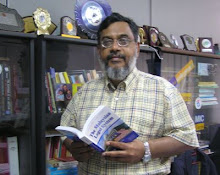
By Datuk Dr Denison Jayasooria
1. GENERAL COMMENTS
1.1 Two Types of PIOs
Prof Sugata Bose yesterday noted two differing groups of PIO’s (Prosperous and poorer). In the case of prosperous it would imply affluent, confident, well accomplished, well qualified, global and regional players). On the other hand the poor and disadvantaged PIO would imply low-income, low education, low skills, caught with struggles and difficulties. Prof Bose indicated that more needs to be done for the poor PIOs especially by India and the PIO global community.
1.2 PBD Gatherings
I have participated in all the seven PBD gathering since 2003. Focus has been on:-
a) Show casing the successful and outstanding PIO’s globally
b) Calling on affluent and well accomplished PIOs to invest time, money and resources for India’s socio-economic transformation
c) Concerns of critical issues, concerns and struggles of suffering PIO and NRI not highlighted nor articulated nor really discussed.
1.3 Multiple Identities
Yesterday, there was much talk on PIO and their ‘multiple identities’. This implies that the PIO has an identity with the country of adoption as national and citizens but at the same time has cultural and linguistic roots with India which is one of the oldest civilizations.
Greater articulation of these fundamental rights are necessary and therefore a fuller understanding based on the UN Declaration on the Rights of Minorities cab become a foundational projection for PIOs especially the poor and disadvantage.
2. MALAYSIAN PIO CONCERNS
2.1 Not homogenous
Malaysia PIO is a non homogonous group. Historical socio-economic differences among the sub ethnic groups group continue to persist.
2.2 Sense of alienation & marginalization
A majority of Malaysian PIOs feel a sense of alienation and marginalization in Malaysian society. This was reflected in the voting trend in the March 2008 12, General Elections. The political dominance of the Barisan National (BN) was broken including a major reduction in support of the Indian community to the BN.
Today in the Malaysian parliament the number of PIO Members of parliament from the opposition coalition has increased dramatically including representation at the State assembly level and state governments.
2.3 Continued Sense of grievance
There is a deep sense of unhappiness during to the delays in resolving grievance.
While the major issues have been articulated, documented and presented to the Federal government by the MIC, there has been very weak delivery and implementation in addressing the critical concerns. While some action has been taken it is perceived as inadequate by the PIO.
Since the 2008 General Election, the federal government has established a Cabinet level committee chaired by the Deputy Prime Minister and specific intervention strategies and programmes have been identified but there continues to be delays in the implementation. The PIO in Malaysia has not felt the impact of the new initiatives.
Similar sense of disillusionment is being felt by sections of the grassroots and opposition MPs towards the opposition coalition.
2.4 Examples of Grievances Felt
There is general consensus among all political parties and politicians including civil society leaders with regards to the alienation felt. However there are differences with regards to the degree and extend of the grievance especially in terms of statistical analysis, root causes of the problems and the solutions and remedies.
Major grievance is felt by the section of PIO who have been displaced from the plantations and reside in urban squatters and low cost flats. They comprise the bottom 30% of the PIOs who are urban poor and low income families.
a) Lack of access and inclusion to services especially urban poor poverty eradication programmes, public housing and social services including the registration of birth and identification cards
b) Educational concerns- access to press school, underachievement at primary and secondary schools, resources for Tamil schools, higher education and training opportunities.
c) Restricted opportunities in civil service and promotions within the civil service.
d) Inability to attain business loans, entrepreneurship training, access to business contracts and projects of the government, inability to secure adequate taxi and transport vehicle permits.
e) Youth and family based problems including crime and anti social behavior and gang related activities.
f) Human rights violations (use of ISA, Police abuse, death in custody, death by Police shooting)
g) Religious freedoms issues (temple demolitions and conversions related matters)
3. MULTIPLE INTERVENTION STRATGIES
While there is the need for state intervention and action however self help initiatives through educational and economic empowerment is very necessary.
Developing effective local networks for action alongside other marginalized and disadvantaged groups is very necessary as PIO concerns and issues are not necessarily exclusive only to Indians but also common to other disadvantaged minority groups. It is necessary to develop a national approach and not as a communal concern.
It is very important to recognize many positive aspects of Malaysian life including constitutional protection as citizens. Malaysia is a good land and the Millennium Development Goals (MDGs) indicate good quality of life index.
Majority of the people including dominant groups (Malay Muslims) appreciate Malaysian Indian contributions towards national development. We must work in partnership with all communities for the national development in general and also the advancement of PIOs.
4. SOME RECOMMENDATIONS
What can and should the Global PIO & NRI community do to facilitate the improvement of Malaysian PIOs
4.1 Global PIO Fact Finding Team
The Ministry of Overseas Indian Affairs and Confederation of Indian Industry should establish a High Level Committee of Global PIOs to undertake a fact finding visit to Malaysia.
The team to Malaysia is to articulate the concerns, grievances and make specific recommendations for the social development improvements as well as addressing the human rights violations (economic, social, cultural, political and civil)
4.2 Indian Business support
Indian businesses operating in Malaysia-Singapore should be encouraged to provide opportunities for PIO participation especially of those in Malaysia especially in areas of investment, employment, job placement and training opportunities. A majority of these businesses are members of CII.
4.3 Educational & Training opportunities for PIOs in India
Previous PBD’s gatherings discussed in detail concerning opportunities in educational areas and educational institutions in India. There was also a proposal to establish a PIO University, however this year the Indian PM made no reference to these possibilities in his key note address. Therefore this is a major area of development.
-------------------
Outline of a paper presented at the 2009 PBD (Indian Diaspora Global Conference), Asia-Pacific Regional Session held at Chennai from Jan 8 & 9, 2009
Saturday, January 10, 2009


Saturday, January 03, 2009
Race Relations Act in Malaysia: To be governed by the heart or by the law
BRIEF REPORT
Roundtable discussion on the proposed
RACE RELATIONS ACT IN MALAYSIA:
TO BE GOVERNED BY THE HEART OR BY THE LAW?
The Institute of Ethnic Studies (KITA), Universiti Kebangsaan Malaysia (UKM) successfully hosted a one day Roundtable Discussion on Oct 30, 2008 at the Dewan Sri Kayangan, Danau Golaf Club, UKM Banggi.
INTRODUCTION
Over 100 participants and sixteen panellist/ moderators took part. Among them were very prominent former civil servants, academics, public intellectuals, civil society activist and advocates. There were formal presentations by the panellist, feedback and input from many of the participants. The discussions were open and frank, critical yet respectful of differing views. It also raised many recommendations for future action to enhance and strengthen ethnic relations and greater inclusion of all communities and groups in Malaysian society.
Hearing a diversity of Malaysian Voices
This one day discussion provided an opportunity to hear many voices. In a multi racial and multi cultural Malaysia it is important to hear the diversity of views which has enriched the Kita Roundtable.
The voices were heard from very senior and prominent Malaysians like the former Inspector General of Police Tun Hanif Omar from Peninsular Malaya, Tan Sri Simon Siapaun from Sabah, and Dato Peter Minos from Sarawak. Indigenous people’s group was represented by civil society activist Adrian Lasimbang and lawyer Barun Bian. We heard voices of women activist and social commentators like Dato Paduka Marina Mahathir and Ms Honey Tan. Other public intellectuals were Dr KJ John and legal experts like Datuk Haji Kuthubul Zaman, Associate Prof Dr Azmi Sharom and Edmund Bon gave clarity to legal and constitutional perspectives.
The sessions were effectively chaired by Tan Sri KS Nijhar, Dato Ghazali Dato Yusoff and Steven Doss who also provided their analysis and input. It was noted that women and young people were not adequately represented in the three panels and this will be given serious consideration in future Kita roundtable discussions.
Setting the Agenda of the Kita Roundtable
The Kita Discussions was officially declared opened by Tan Sri Dato’Paduka Dr Mazlan Ahmad, Chairman of the UKM Board of Directors. In his speech he noted that the founding fathers of Malaysia had “adopted a culturally accepted mode of decision making which was consultative, participatory, persuasive, ‘give and take’ approach which was built on the pillars of sensitivity and sensibility.
Tan Sri Mazlan also affirmed that “we must as a nation return to our historical roots and rediscover how this beautiful land can accommodate all its citizens irrespective of race or religion”.
In this opening address he further reiterated saying that he was confident that in this land all our visions and dreams can be fulfilled. He went on to conclude “Building a more inclusive society for all communities without minimising the core principles as spelled out in the Federal Constitution and Rukun Negara is most essential”.
Tan Sri Mazlan went on further to identify three key issues which the panellist and participants should keep their focus on namely:--
Should we introduce more laws or a comprehensive law to enhance ethnic relations and punish those who work to undermine and destroy it?
Is legislation the most effective way or do we have better options through strengthening of ethnic ties and addressing root grievance of some of communities?
Is ethnic relations really about values and relationships? Is this therefore a matter of the heart? If so then should we focus our attention on strengthening great appreciation and understanding of each other?
MAJOR ISSUES & CONCERNS IDENTIFIED
While many issues and concerns were highlighted there were nine key concerns which were frequently highlighted by panellist and participants. These are matters pertaining to issues impacting race relations in Malaysia which have a direct bearing on how to mange race relations. Whether the approach required a law or is a matter of the heart nonetheless these concerns impact on ethnic relations in the country as identified by the Kita Roundtable.
Diversity as an historical strength
All the panellist and speakers affirmed the multi ethnic, multi cultural, multi linguistic and multi religious diversity of Malaysia as a historical strength. In addition it was noted that the diversity is much bigger than just reference to Malays, Chinese and Indians, as there are ‘one hundred over’ ethnic and sub ethnic indigenous groups in Sabah and Sarawak.
Race base political parties
The issue related to the system of politics in Malaysia which is race and religious based political parties. This system continues to keep racial and religious dimensions as central to political ideology and activism. This approach will not reduce the highlight of race and religion as each politician will champion ones own race at the expense of other racial groups to gain popular vote.
Polarized educational system
The educational system in Malaysia continues to propagate and preserve the racial divide with majority of young Malay children in national or religious schools, Chinese and Indian children in vernacular schools. In addition the current environment in national schools is not fostering a multiracial and religious Malaysian approach as many of the teachers are taking very narrow understandings of race and religion.
Social Contract & Special Position
The complex arrangements of special position for the Malays and Bumiputra community as described in the Federal Constitution and social contract. It was expressed that the problem was not so much with the policy of positive discrimination or the New Economic Policy or even special position but in the implementation and delivery of this policy. It was noted that only a certain section from within the Bumiputra community benefits from the special assistance and not all the indigenous groups.
In this context some spoke of the institutional and structural nature of discrimination through public sector agencies and institutions using public resources which have further created a barrier among the various ethnic groups where one dominant group has access but other socially deprived do not have access.
Lack of information & understanding
It was noted that the younger generation does not have a clear information or understanding of history and public policy matters especially thought pertaining to the Federal Constitution, Rukun Negara, special position and social contract. The balance which is provided in terms of rights and responsibilities including that of the ‘special position of the Malays and other indigenous people’ on the one hand and the ‘legitimate interest of other communities’ on the other hand is not fully appreciated by both politicians and public officials.
Socio-economic disparities among indigenous people
The socio-economic disparities among sections of Malaysian society continue to be translated into racial and regional tensions. One major concern among the indigenous people of Sabah and Sarawak is unequal share of public resources devoted for infrastructure and economic development. In addition the unresolved issues pertaining to illegal immigrants continue to have devastating effect on indigenous people of Sabah.
Marginalised & disadvantaged minorities
Marginalised and disadvantaged minority communities such as the urban poor and displaced Indian plantation workers continue to have an impact on ethnic relations among the poor and low income families and communities residing in urban locations. The root grievance which is socio-economic in nature is often translated into power struggle between the dominant community who are perceived to control public resources and the minority community who feel alienated.
Media –Fanning Conflict & negativity
The role played by the media whether the formal and mainstream or informal and internet based cannot be underestimated. There have been times when both types of media have played an irresponsible role in fanning conflict or playing up to the gallery which has had negative impact on ethnic relations.
It was noted that the negative highlight on ethnic relations has captivated the image of people, where else the positive, holistic and exemplary real life stories of harmonious living is not given coverage.
Moving beyond race
Some participants noted that there were double or triple discrimination as other issues further complicated the levels of marginalisation considerations such as gender, sexuality, socio-economic status (poor and low income families), age and disability. These indicators in some cases had more profound effect as compared to race as certain sections of our society were identified by these indicators as opposed to that of ethnicity or even religion.
USING LEGISLATION TO MANAGE RACE RELATIONS IN MALAYSIA
At the heart of the Kita Roundtable, it was to determine if legislation was the major vehicle or effective tool to manage race relations in Malaysia. A simple analysis would show that a majority of the panellist and speakers from among the participants were sceptical of the effectiveness of legal measures to foster effective ethnic relations in Malaysia.
Three responses were noted. The first response is ‘definitely no’. Second, lets wait and see what bill that government drafts (a wait and see attitude) and third an alternative legislation or framework which is much wider than race.
Those who said no and why?
Some felt that Malaysia already had many laws such as the Sedition Act which could be used to charge anyone using racial overtones which impacts in a very inflammatory way. However it was noted that there was weak enforcement and selective prosecution which is at the heart of the problem. If effectively used on individuals or groups it could be an effective mechanism to curtail speech or provocation of any kind.
Others felt that another law in the hands of politicians will be further abused through selective prosecution or in action.
However they key indicator is that the new proposed law will not really address the root issues of discontentment in ethnic relations which is surrounded with the implementation of Article 153 of the Federal Constitution and the social contract.
Panellist provided a review of the British Race Relations & Equality Opportunities Act which largely is promoting equality of opportunities and addressing discrimination of any kind. This approach was felt was not consistent with Article 153 of the Federal Constitution
Alternative Approach or Framework
A number of alternative suggestions and recommendations were made which had very good possibilities and which Kita could host further in-depth discussions.
Federal Constitution Revisted
It was felt that there was be not only a historical review of the document but a modern understanding of the balance provided in the Federal Constitution. This requires a contemporary rewrite of the dynamic issues especially for the younger generation as well as those holding public officer to note in the course of their duties as civil servants.
First, it was clearly expounded that the Federal Constitution provides a balance especially affirming the position of Islam as the official religion but other religions have their freedom (Article 3). The national language is the Malay language but no restriction to the study of the language of any other community (Article 152).
Second, in the case of special position of the Malays and natives of the states of Sabah and Sarawak it is balanced with the legitimate interest of other communities (Article 153 sub clause 1 & 2). Often in the discussion on social contract the balancing emphasis of the Federal Constitution is not discussed. Therefore there is a need to unpack this term “legitimate interest of other communities”. This must be done in the spirit of the Federal Constitution and the collective understanding which could mean ‘legitimate expectations’
Third, that the reservations made with regards to positions in public service, scholarships, educational and training privileges and facilities, permit or license for trade and business to such proportion “deem reasonable” (Article 153 clause 2). There is a need to understand this term in the spirit of the Federal Constitution and collective understanding.
Fourth, it was pointed out that Article 153 clause 2 on measures such as positions in the public service must be consistent with Article 136 which is referred to in Article 153 clause 5. Article 136 states that all persons of whatever race within the public service must be treated impartially.
Fifth, it is therefore of utmost importance that to strengthen race relations in Malaysia a fuller and contemporary commentary on the Federal Constitution and the Rukun Negara is very important in order to ensure that all communities have a place in this country and have a share of the resources and opportunities.
An alternative legislation - Equality Act
It was proposed that an Equality Act be formulated that moves beyond the parameters of race taking gender, socio-economic marginalisation, disability, age and sexuality into account. It was pointed out that discrimination occurs not just on account of race or ethnicity but other indicators are critical. This requires further study.
Integrity Model of Integration
Another framework given was one that is based on an Integrity Model of Integration which provides a transition from the Merdeka generation way of thinking to one which is Malaysia generation which celebrates diversity.
Human Rights Framework Model
Another alternative suggested was a Human Rights Framework which takes the citizenship model. The call here is for Malaysia to ratify and become a signatory to all the major UN Conventions and covenants including the Civil and Political Convention, the Economic, Social & Cultural Convention and the Convention on the Elimination of all forms racial discrimination
RACE RELATIONS – A MATTER OF THE HEART & ADDRESSAL OF GRIEVANCES
While much of the discussion focused on whether a singular new legislation will provide solutions, the conclusion is one of using existing legislation with greater efforts placed in addressing grievances and tackling bad implementation in the spirit of the Federal Constitution and Rukun Negara.
It was pointed out that at the heart of community conflict and good relations are unresolved socio-economic inequalities, lack of equal opportunities, just and fair mechanisms to address socio-economic grievances. Marginal communities who feel alienated from mainstream must be brought into the mainstream in order to reduce and prevent conflict.
These communities could be sub ethnic communities among the indigenous communities or sub ethnic groups within the minority communities. An agenda for social inclusion and equal access will reduce the anger, rage and rejection felt by such sub communities and foster greater cordiality, peace and harmony.
Participants and panellist also devote some time to addressing matters of the heart. In this connection five key themes were highlighted:-
First, that positive outlook to ethnic relations is moulded from the family and the living environment in which children and young people grown. Therefore the internalisation of prejudice and negative perceptions must be addressed early by parents, teachers and community leaders. This is where schools teachers must be role models of a multi cultural Malaysia. This impacts selection and training of primary schools teachers including the formal and informal teaching environment of the school.
Secondly, it is imperative that both political leadership and the civil service administrators and implementers execute their public roles in a just and fair basis transcending race and religion in policy formulation and service delivery. Value base leaders are necessary who will speak up for all communities than just trying to champion their respective racial groups.
Third, it is necessary to launch a national level campaign through public education in winning the heart and minds of Malaysians towards national unity and patriotism with the King, flag and national anthem as our national symbols of nationhood. Special programmes be introduced in all schools as a formal agenda based on the spirit of the Federal Constitution and Rukun Negara.
Fourth, it is imperative that there is a relearning of Malaysian history where the stories of all the communities become integral for national building, whether at the time of securing independence, in the formation of Malaysia, in defence of the nation from communist threat or confrontation with Indonesia, in the economic and prosperity development of the nation.
A more creative and dynamic approach to learning history through creative and emotive appeal is foundational in building future leaders in order that they will pursue a joint agenda in a competitive globalise world.
Fifth, that children and young people must be inculcated with both values and competencies in treating others with respect, dignity, tolerance and understanding.
----------------------
Summary Report of the Roundtable Discussion prepared by Datuk Dr Denison Jayasooria which was presented at the end of the RTD on Oct 30, 2008. Feedback please email denisonjayasooria@gmail.com
Roundtable discussion on the proposed
RACE RELATIONS ACT IN MALAYSIA:
TO BE GOVERNED BY THE HEART OR BY THE LAW?
The Institute of Ethnic Studies (KITA), Universiti Kebangsaan Malaysia (UKM) successfully hosted a one day Roundtable Discussion on Oct 30, 2008 at the Dewan Sri Kayangan, Danau Golaf Club, UKM Banggi.
INTRODUCTION
Over 100 participants and sixteen panellist/ moderators took part. Among them were very prominent former civil servants, academics, public intellectuals, civil society activist and advocates. There were formal presentations by the panellist, feedback and input from many of the participants. The discussions were open and frank, critical yet respectful of differing views. It also raised many recommendations for future action to enhance and strengthen ethnic relations and greater inclusion of all communities and groups in Malaysian society.
Hearing a diversity of Malaysian Voices
This one day discussion provided an opportunity to hear many voices. In a multi racial and multi cultural Malaysia it is important to hear the diversity of views which has enriched the Kita Roundtable.
The voices were heard from very senior and prominent Malaysians like the former Inspector General of Police Tun Hanif Omar from Peninsular Malaya, Tan Sri Simon Siapaun from Sabah, and Dato Peter Minos from Sarawak. Indigenous people’s group was represented by civil society activist Adrian Lasimbang and lawyer Barun Bian. We heard voices of women activist and social commentators like Dato Paduka Marina Mahathir and Ms Honey Tan. Other public intellectuals were Dr KJ John and legal experts like Datuk Haji Kuthubul Zaman, Associate Prof Dr Azmi Sharom and Edmund Bon gave clarity to legal and constitutional perspectives.
The sessions were effectively chaired by Tan Sri KS Nijhar, Dato Ghazali Dato Yusoff and Steven Doss who also provided their analysis and input. It was noted that women and young people were not adequately represented in the three panels and this will be given serious consideration in future Kita roundtable discussions.
Setting the Agenda of the Kita Roundtable
The Kita Discussions was officially declared opened by Tan Sri Dato’Paduka Dr Mazlan Ahmad, Chairman of the UKM Board of Directors. In his speech he noted that the founding fathers of Malaysia had “adopted a culturally accepted mode of decision making which was consultative, participatory, persuasive, ‘give and take’ approach which was built on the pillars of sensitivity and sensibility.
Tan Sri Mazlan also affirmed that “we must as a nation return to our historical roots and rediscover how this beautiful land can accommodate all its citizens irrespective of race or religion”.
In this opening address he further reiterated saying that he was confident that in this land all our visions and dreams can be fulfilled. He went on to conclude “Building a more inclusive society for all communities without minimising the core principles as spelled out in the Federal Constitution and Rukun Negara is most essential”.
Tan Sri Mazlan went on further to identify three key issues which the panellist and participants should keep their focus on namely:--
Should we introduce more laws or a comprehensive law to enhance ethnic relations and punish those who work to undermine and destroy it?
Is legislation the most effective way or do we have better options through strengthening of ethnic ties and addressing root grievance of some of communities?
Is ethnic relations really about values and relationships? Is this therefore a matter of the heart? If so then should we focus our attention on strengthening great appreciation and understanding of each other?
MAJOR ISSUES & CONCERNS IDENTIFIED
While many issues and concerns were highlighted there were nine key concerns which were frequently highlighted by panellist and participants. These are matters pertaining to issues impacting race relations in Malaysia which have a direct bearing on how to mange race relations. Whether the approach required a law or is a matter of the heart nonetheless these concerns impact on ethnic relations in the country as identified by the Kita Roundtable.
Diversity as an historical strength
All the panellist and speakers affirmed the multi ethnic, multi cultural, multi linguistic and multi religious diversity of Malaysia as a historical strength. In addition it was noted that the diversity is much bigger than just reference to Malays, Chinese and Indians, as there are ‘one hundred over’ ethnic and sub ethnic indigenous groups in Sabah and Sarawak.
Race base political parties
The issue related to the system of politics in Malaysia which is race and religious based political parties. This system continues to keep racial and religious dimensions as central to political ideology and activism. This approach will not reduce the highlight of race and religion as each politician will champion ones own race at the expense of other racial groups to gain popular vote.
Polarized educational system
The educational system in Malaysia continues to propagate and preserve the racial divide with majority of young Malay children in national or religious schools, Chinese and Indian children in vernacular schools. In addition the current environment in national schools is not fostering a multiracial and religious Malaysian approach as many of the teachers are taking very narrow understandings of race and religion.
Social Contract & Special Position
The complex arrangements of special position for the Malays and Bumiputra community as described in the Federal Constitution and social contract. It was expressed that the problem was not so much with the policy of positive discrimination or the New Economic Policy or even special position but in the implementation and delivery of this policy. It was noted that only a certain section from within the Bumiputra community benefits from the special assistance and not all the indigenous groups.
In this context some spoke of the institutional and structural nature of discrimination through public sector agencies and institutions using public resources which have further created a barrier among the various ethnic groups where one dominant group has access but other socially deprived do not have access.
Lack of information & understanding
It was noted that the younger generation does not have a clear information or understanding of history and public policy matters especially thought pertaining to the Federal Constitution, Rukun Negara, special position and social contract. The balance which is provided in terms of rights and responsibilities including that of the ‘special position of the Malays and other indigenous people’ on the one hand and the ‘legitimate interest of other communities’ on the other hand is not fully appreciated by both politicians and public officials.
Socio-economic disparities among indigenous people
The socio-economic disparities among sections of Malaysian society continue to be translated into racial and regional tensions. One major concern among the indigenous people of Sabah and Sarawak is unequal share of public resources devoted for infrastructure and economic development. In addition the unresolved issues pertaining to illegal immigrants continue to have devastating effect on indigenous people of Sabah.
Marginalised & disadvantaged minorities
Marginalised and disadvantaged minority communities such as the urban poor and displaced Indian plantation workers continue to have an impact on ethnic relations among the poor and low income families and communities residing in urban locations. The root grievance which is socio-economic in nature is often translated into power struggle between the dominant community who are perceived to control public resources and the minority community who feel alienated.
Media –Fanning Conflict & negativity
The role played by the media whether the formal and mainstream or informal and internet based cannot be underestimated. There have been times when both types of media have played an irresponsible role in fanning conflict or playing up to the gallery which has had negative impact on ethnic relations.
It was noted that the negative highlight on ethnic relations has captivated the image of people, where else the positive, holistic and exemplary real life stories of harmonious living is not given coverage.
Moving beyond race
Some participants noted that there were double or triple discrimination as other issues further complicated the levels of marginalisation considerations such as gender, sexuality, socio-economic status (poor and low income families), age and disability. These indicators in some cases had more profound effect as compared to race as certain sections of our society were identified by these indicators as opposed to that of ethnicity or even religion.
USING LEGISLATION TO MANAGE RACE RELATIONS IN MALAYSIA
At the heart of the Kita Roundtable, it was to determine if legislation was the major vehicle or effective tool to manage race relations in Malaysia. A simple analysis would show that a majority of the panellist and speakers from among the participants were sceptical of the effectiveness of legal measures to foster effective ethnic relations in Malaysia.
Three responses were noted. The first response is ‘definitely no’. Second, lets wait and see what bill that government drafts (a wait and see attitude) and third an alternative legislation or framework which is much wider than race.
Those who said no and why?
Some felt that Malaysia already had many laws such as the Sedition Act which could be used to charge anyone using racial overtones which impacts in a very inflammatory way. However it was noted that there was weak enforcement and selective prosecution which is at the heart of the problem. If effectively used on individuals or groups it could be an effective mechanism to curtail speech or provocation of any kind.
Others felt that another law in the hands of politicians will be further abused through selective prosecution or in action.
However they key indicator is that the new proposed law will not really address the root issues of discontentment in ethnic relations which is surrounded with the implementation of Article 153 of the Federal Constitution and the social contract.
Panellist provided a review of the British Race Relations & Equality Opportunities Act which largely is promoting equality of opportunities and addressing discrimination of any kind. This approach was felt was not consistent with Article 153 of the Federal Constitution
Alternative Approach or Framework
A number of alternative suggestions and recommendations were made which had very good possibilities and which Kita could host further in-depth discussions.
Federal Constitution Revisted
It was felt that there was be not only a historical review of the document but a modern understanding of the balance provided in the Federal Constitution. This requires a contemporary rewrite of the dynamic issues especially for the younger generation as well as those holding public officer to note in the course of their duties as civil servants.
First, it was clearly expounded that the Federal Constitution provides a balance especially affirming the position of Islam as the official religion but other religions have their freedom (Article 3). The national language is the Malay language but no restriction to the study of the language of any other community (Article 152).
Second, in the case of special position of the Malays and natives of the states of Sabah and Sarawak it is balanced with the legitimate interest of other communities (Article 153 sub clause 1 & 2). Often in the discussion on social contract the balancing emphasis of the Federal Constitution is not discussed. Therefore there is a need to unpack this term “legitimate interest of other communities”. This must be done in the spirit of the Federal Constitution and the collective understanding which could mean ‘legitimate expectations’
Third, that the reservations made with regards to positions in public service, scholarships, educational and training privileges and facilities, permit or license for trade and business to such proportion “deem reasonable” (Article 153 clause 2). There is a need to understand this term in the spirit of the Federal Constitution and collective understanding.
Fourth, it was pointed out that Article 153 clause 2 on measures such as positions in the public service must be consistent with Article 136 which is referred to in Article 153 clause 5. Article 136 states that all persons of whatever race within the public service must be treated impartially.
Fifth, it is therefore of utmost importance that to strengthen race relations in Malaysia a fuller and contemporary commentary on the Federal Constitution and the Rukun Negara is very important in order to ensure that all communities have a place in this country and have a share of the resources and opportunities.
An alternative legislation - Equality Act
It was proposed that an Equality Act be formulated that moves beyond the parameters of race taking gender, socio-economic marginalisation, disability, age and sexuality into account. It was pointed out that discrimination occurs not just on account of race or ethnicity but other indicators are critical. This requires further study.
Integrity Model of Integration
Another framework given was one that is based on an Integrity Model of Integration which provides a transition from the Merdeka generation way of thinking to one which is Malaysia generation which celebrates diversity.
Human Rights Framework Model
Another alternative suggested was a Human Rights Framework which takes the citizenship model. The call here is for Malaysia to ratify and become a signatory to all the major UN Conventions and covenants including the Civil and Political Convention, the Economic, Social & Cultural Convention and the Convention on the Elimination of all forms racial discrimination
RACE RELATIONS – A MATTER OF THE HEART & ADDRESSAL OF GRIEVANCES
While much of the discussion focused on whether a singular new legislation will provide solutions, the conclusion is one of using existing legislation with greater efforts placed in addressing grievances and tackling bad implementation in the spirit of the Federal Constitution and Rukun Negara.
It was pointed out that at the heart of community conflict and good relations are unresolved socio-economic inequalities, lack of equal opportunities, just and fair mechanisms to address socio-economic grievances. Marginal communities who feel alienated from mainstream must be brought into the mainstream in order to reduce and prevent conflict.
These communities could be sub ethnic communities among the indigenous communities or sub ethnic groups within the minority communities. An agenda for social inclusion and equal access will reduce the anger, rage and rejection felt by such sub communities and foster greater cordiality, peace and harmony.
Participants and panellist also devote some time to addressing matters of the heart. In this connection five key themes were highlighted:-
First, that positive outlook to ethnic relations is moulded from the family and the living environment in which children and young people grown. Therefore the internalisation of prejudice and negative perceptions must be addressed early by parents, teachers and community leaders. This is where schools teachers must be role models of a multi cultural Malaysia. This impacts selection and training of primary schools teachers including the formal and informal teaching environment of the school.
Secondly, it is imperative that both political leadership and the civil service administrators and implementers execute their public roles in a just and fair basis transcending race and religion in policy formulation and service delivery. Value base leaders are necessary who will speak up for all communities than just trying to champion their respective racial groups.
Third, it is necessary to launch a national level campaign through public education in winning the heart and minds of Malaysians towards national unity and patriotism with the King, flag and national anthem as our national symbols of nationhood. Special programmes be introduced in all schools as a formal agenda based on the spirit of the Federal Constitution and Rukun Negara.
Fourth, it is imperative that there is a relearning of Malaysian history where the stories of all the communities become integral for national building, whether at the time of securing independence, in the formation of Malaysia, in defence of the nation from communist threat or confrontation with Indonesia, in the economic and prosperity development of the nation.
A more creative and dynamic approach to learning history through creative and emotive appeal is foundational in building future leaders in order that they will pursue a joint agenda in a competitive globalise world.
Fifth, that children and young people must be inculcated with both values and competencies in treating others with respect, dignity, tolerance and understanding.
----------------------
Summary Report of the Roundtable Discussion prepared by Datuk Dr Denison Jayasooria which was presented at the end of the RTD on Oct 30, 2008. Feedback please email denisonjayasooria@gmail.com
Ethnic Relations & Community Harmony: A Malaysian Perspective
By Datuk Dr Denison Jayasooria
1. MALAYSIAN HISTORY & CONTEMPORARY REALITIES
Historical origins of Independent Malaya (August 31, 1957) & Formation of Malaysia (September 16, 1963)
Malaysia is a multi-ethnic society. Malaysian population is 23.27 million (2000 Census) (Malays & natives of Sabah & Sarawak, including the Orang Asli (65.1%), Chinese (26%), Indians (7.7%) & non citizens (5.9%)
Malaysia a multi-religious society (Islam (60.4%), Buddhism (19.2%), Christianity (9.1%), Hinduism (6.3%), Other Chinese religions (2.6%), Paganism
Malaysia a multi-cultural society (Malay, Chinese, Indian, variety of indigenous cultures of the natives of Sabah, [for example, KadazanDusun, Muruts, Bajaus, Rungus etc], Sarawak [for example, Ibans, Bidayuh, Melanau, Orang Ulu etc], orang asli or 'aborigines' of Peninsular Malaysia.
Malaysia is a multi-lingual society (The national language is Bahasa Melayu but other languages spoken include English, Mandarin, and the many Chinese dialects, Tamil, Malayalee, Punjabi, Iban, KadazanDusun, Rungus, various Orang asli languages).
These diversities reflect the rich Malaysian heritage. It provides unique opportunities for community harmony but at the same time there are challenges which require greater attention to addressing differences with understanding.
2. POLITICAL LEADERSHIP & DECISION MAKING PROCESS
Malaysia adopted a form of government which is based on parliamentary democracy with a constitutional monarch. The Federal Constitution provides protection for all the Malaysian communities.
Independence struggle & political formation for the newly independent nation-state from the British required inter-ethnic political collaboration and partnership among ethnic based political parties - the United Malay National Organisation (UMNO), Malaysian Chinese Association (MCA) & Malaysian Indian Congress (MIC).
Modern Malaysia was built on the basis of consensus leadership through discussions, consultations, a 'give and take' approach and a comprehensive agenda of power sharing. The leadership and decision making models of all the Malaysian Prime Ministers is indicative of being inclusive political leaders trying to accommodate the wishes and aspirations of all the communities.
Since the first general elections in 1959 till the 12th General Election in 2008, the ruling coalition is based of a variety of racial and multi racial political parties. Every community is represented either by elected or appointed political community representatives.
The 12th General Election results saw tremendous changes to the political landscape as an alternative multi racial coalition has emerged with alternative views but still holding to the core value of multi racial appeal.
There is now a challenge to the nature and style of Malaysian politics which centres on whether the way forward for Malaysia is through individual racial based parties working together in a coalition or as individual multi racial parties with differing political ideologies.
4. SOCIO-ECONOMIC POLICIES & DEVELOPMENTS
The post independent Malaya saw tremendous socio-economic disparities especially among the Malay community and the Chinese and Indian communities. Majority of the Malays were rural based farmers in contrast to Chinese who were in the towns and had an economic advantage. In a similar way there was a section of the Indian community who were English educated with good professional qualifications especially in medicine and law.
The government introduced new policies and programmes to address the socio-economic disadvantage of the Malay community after the 'inter- racial conflicts on May 13, 1969'. The New Economic Policy (NEP) was introduced in 1970 which was based on the principle of positive discrimination to address the socio-economic disadvantage through education and economic development.
Malaysia has seen tremendous changes in the socio-economic dimensions with outstanding achievements in poverty reduction from 50% of the households to less than 3.6% in 2007 and overall improvements of household income levels of all the communities. Sizable sections of the Malay community have advanced socio-economically. However their economic achievements of Malays is still lagging behind the Chinese community and therefore the Government feels that it must give greater focus towards this objective.
The contemporary grievances among all the communities centre around ineffective delivery and implementation, abuses of the special provisions, the emergence of the dependency syndrome, restrictive employment opportunities and promotions for non Malays in the public sector, rising income inequalities among the Malay and indigenous communities and complaints from other communities (especially among the poor and low income families- sections of displaced Indian plantation workers, urban poor Malays and forest based communities) that their needs and concerns are not adequately addressed.
There is a real challenge for the political leadership to continue to institute just and fair measures which is 'needs based', irrespective of racial or ethnic origins. The real challenge for political leaders, public policy makers and the civil service is holding a balance of the Federal Constitution Article 152 between the 'special position of the Malays and natives of Sabah and Sarawak' on the one hand and 'the legitimate interests of other communities'.
4. CULTURAL POLICIES & IMPLICATIONS
4.1 Religious Freedom
The Federal Constitution protects the freedom of religion in Malaysia indicating in Article 3 that "Islam is the religion of the Federation but other religions may be practised in peace and harmony".
The visibility of this liberal policy is evident in Malaysian society, for example through the numerous places of worship. All the main religious festival dates are national holidays and in the context of major religious/cultural festivals (Hari raya, Christmas, Chinese New Year and Deepavali, Indian light overcoming darkness celebration), there is an official national celebration officiated by the Malaysian King.
There are however complaints from non Muslim religious leaders especially on matters pertaining to conversions and demolitions of places of worship. In addition sections of the Muslim community have complained over the moral policing role of Muslim religious enforcement officials.
There is a rise in religious consciousness among all the religious groups and therefore there is a need for new efforts in fostering greater understanding, appreciation and tolerance towards each other.
4.2 Vernacular Languages
The Federal Constitution clearly indicates in Article 152 that "the national language shall be the Malay language". Majority of Malaysians have mastered the national language, and therefore especially among the younger generation of Chinese and Indians their new challenges as in the case of Malays is competency in English.
However the Federal Constitution goes on state in the same article "nothing in this clause shall prejudice the right of the Federal Government or of any State Government to preserve and sustain the use and study of the languages of any other community in the Federation".
Malaysia has government funded and assisted primary vernacular Chinese and Tamil primary schools which have their historical developments in the pre Independent days. These schools are run by fully trained teachers who are employed by the government. About 95% of Chinese children and over 50% of Indian children go to vernacular schools. In the case of Chinese vernacular schools, over 60,000 non Chinese children also have enrolled. In the case of Tamil vernacular schools, the presence of non Tamils is very small, for example, an estimated 200 Orang Asli children are enrolled in Tamil schools.
There are complaints that the continued presence of vernacular schools impact on inter-racial integration among young people. This is because from a young age many students are learning in mono-cultural environments and inter ethnic interaction becomes difficult in the secondary and higher education institutions. This is also the case for many Malay children in Islamic schools or in residential and special institutions which is dominantly mono cultural.
The Indian community leaders complain of inadequate funding from the government for infrastructure and resources in Tamil vernacular schools. A majority of Indian parents sending their children are from the lower income families and therefore they are unable to finance the schools as the Chinese community does.
Questions are being raised on the continued presence of vernacular schools, religious schools and mono cultural institutions including the new developments of international and private schools. The challenge is how does the nation foster stronger ethnic relations in this context where young children are being segregated on their preference for languages or religion?
Holding the right balance to linguistic and religious rights through segregated educational institutions on the one hand and on the other through inclusive educational institutions (which is multi linguistic and religious) for all the diverse communities will continue to be a real challenge to policy makers and community leaders
The government funded radio and TV stations provide new and programmes in all the major languages Malay, English, Mandarin and Tamil. At the local levels the government also funds sub ethnic radio stations. In addition the private sector radio and TV stations also air in all the major languages. In a similar way there are no restrictions in the use of vernacular languages in the print media as there are vernacular newspapers and magazines in all the major languages.
It is of utmost importance that reason prevails over emotions in playing to political- racial sentiments. There has been a proposal for the establishment of a Media Council to monitor and regulate the media especially in managing ethnic sensitivities. The real challenge for the media is to hold a balance between playing up the story for increase readership or viewership and noting its implications and impact on ethnic relations.
5. COMMUNITY RELATIONS & HARMONY
With rapid urbanization, the traditional divides have been broken. At the time of Independence a majority of Malays lived in the rural villages, Indians in the plantations and Chinese in town and mining areas. However the demography has changed with over 62% of Malaysian now residing in urban centers and neighborhoods. While there are still enclaves of non-ethnic neighborhoods, however in urban locations this is fast changing with rural-urban migration.
At the grassroots there are community safety committees comprising local residents. They provide some level of community safety to address neighborhood security and crime prevention. In addition they serve community mediation teams addressing local issues and concerns. There is tremendous potential in fostering this network of grassroots leaders and they can serve as effective neighborhood ambassadors for peace and harmony.
At the national level the Government has established a National Unity Advisory Panel comprising representatives from various social and religious organizations. While this panel is purely advisory they provide effective feed back to the government. The panel can also be mobilized to influence public opinion especially among the communities.
Concluding Remarks
The Malaysian style of ethnic relations and nation building provides a healthy model of how a diverse group of people from different ethnic, religious, linguistic and cultural heritage have made this Malay land their home. While we note the historical realities of this nation and our past, nonetheless Malaysia as a nation state is a new creation with many compromises and contradictions.
As a nation of many 'people groups' we have come a long way. The path we traveled has not been easy but our leaders and our people have strived to build a land where all people can share the wealth and prosperity. On this path we have faced many challenges, many of which we have overcome but some still remains unresolved.
We will continue to face many more challenges in holding a balance in public policy formulation and provisions that enable all communities irrespective of their ethnic origin, religious background or gender especially the poor and disadvantaged will have a rightful opportunity to participate in economic and social advancement.
However there is hope that our national and community leaders will seek to put the nation first and themselves last in building a better nation along side our neighboring counties in the context of globalization.
Selected References
Federal Constitution. 2003. Petaling Jaya: International Law Books Services.
Mid-Term Review of the Ninth Malaysia Plan 2006-2010. 2008 Kuala Lumpur: Government Printers.
Population Distribution and Basic Demographic Characteristics. 2000. Putrajaya: Department of Statistics Malaysia.
Leete, Richard. 2007. Malaysia: From Kampong to Twin Towers. Shah Alam: Oxford Fajar.
______________________________________________________________________
Outline of paper presented at the Colloquium on Ethnic Relations in Kazakhstan and Malaysia Compared, co-organised by the Institute of Ethnic Studies (KITA), UKM and the Embassy of Kazakhstan in Malaysia, on 18 December 2008, at the Kuala Lumpur Convention Centre.
1. MALAYSIAN HISTORY & CONTEMPORARY REALITIES
Historical origins of Independent Malaya (August 31, 1957) & Formation of Malaysia (September 16, 1963)
Malaysia is a multi-ethnic society. Malaysian population is 23.27 million (2000 Census) (Malays & natives of Sabah & Sarawak, including the Orang Asli (65.1%), Chinese (26%), Indians (7.7%) & non citizens (5.9%)
Malaysia a multi-religious society (Islam (60.4%), Buddhism (19.2%), Christianity (9.1%), Hinduism (6.3%), Other Chinese religions (2.6%), Paganism
Malaysia a multi-cultural society (Malay, Chinese, Indian, variety of indigenous cultures of the natives of Sabah, [for example, KadazanDusun, Muruts, Bajaus, Rungus etc], Sarawak [for example, Ibans, Bidayuh, Melanau, Orang Ulu etc], orang asli or 'aborigines' of Peninsular Malaysia.
Malaysia is a multi-lingual society (The national language is Bahasa Melayu but other languages spoken include English, Mandarin, and the many Chinese dialects, Tamil, Malayalee, Punjabi, Iban, KadazanDusun, Rungus, various Orang asli languages).
These diversities reflect the rich Malaysian heritage. It provides unique opportunities for community harmony but at the same time there are challenges which require greater attention to addressing differences with understanding.
2. POLITICAL LEADERSHIP & DECISION MAKING PROCESS
Malaysia adopted a form of government which is based on parliamentary democracy with a constitutional monarch. The Federal Constitution provides protection for all the Malaysian communities.
Independence struggle & political formation for the newly independent nation-state from the British required inter-ethnic political collaboration and partnership among ethnic based political parties - the United Malay National Organisation (UMNO), Malaysian Chinese Association (MCA) & Malaysian Indian Congress (MIC).
Modern Malaysia was built on the basis of consensus leadership through discussions, consultations, a 'give and take' approach and a comprehensive agenda of power sharing. The leadership and decision making models of all the Malaysian Prime Ministers is indicative of being inclusive political leaders trying to accommodate the wishes and aspirations of all the communities.
Since the first general elections in 1959 till the 12th General Election in 2008, the ruling coalition is based of a variety of racial and multi racial political parties. Every community is represented either by elected or appointed political community representatives.
The 12th General Election results saw tremendous changes to the political landscape as an alternative multi racial coalition has emerged with alternative views but still holding to the core value of multi racial appeal.
There is now a challenge to the nature and style of Malaysian politics which centres on whether the way forward for Malaysia is through individual racial based parties working together in a coalition or as individual multi racial parties with differing political ideologies.
4. SOCIO-ECONOMIC POLICIES & DEVELOPMENTS
The post independent Malaya saw tremendous socio-economic disparities especially among the Malay community and the Chinese and Indian communities. Majority of the Malays were rural based farmers in contrast to Chinese who were in the towns and had an economic advantage. In a similar way there was a section of the Indian community who were English educated with good professional qualifications especially in medicine and law.
The government introduced new policies and programmes to address the socio-economic disadvantage of the Malay community after the 'inter- racial conflicts on May 13, 1969'. The New Economic Policy (NEP) was introduced in 1970 which was based on the principle of positive discrimination to address the socio-economic disadvantage through education and economic development.
Malaysia has seen tremendous changes in the socio-economic dimensions with outstanding achievements in poverty reduction from 50% of the households to less than 3.6% in 2007 and overall improvements of household income levels of all the communities. Sizable sections of the Malay community have advanced socio-economically. However their economic achievements of Malays is still lagging behind the Chinese community and therefore the Government feels that it must give greater focus towards this objective.
The contemporary grievances among all the communities centre around ineffective delivery and implementation, abuses of the special provisions, the emergence of the dependency syndrome, restrictive employment opportunities and promotions for non Malays in the public sector, rising income inequalities among the Malay and indigenous communities and complaints from other communities (especially among the poor and low income families- sections of displaced Indian plantation workers, urban poor Malays and forest based communities) that their needs and concerns are not adequately addressed.
There is a real challenge for the political leadership to continue to institute just and fair measures which is 'needs based', irrespective of racial or ethnic origins. The real challenge for political leaders, public policy makers and the civil service is holding a balance of the Federal Constitution Article 152 between the 'special position of the Malays and natives of Sabah and Sarawak' on the one hand and 'the legitimate interests of other communities'.
4. CULTURAL POLICIES & IMPLICATIONS
4.1 Religious Freedom
The Federal Constitution protects the freedom of religion in Malaysia indicating in Article 3 that "Islam is the religion of the Federation but other religions may be practised in peace and harmony".
The visibility of this liberal policy is evident in Malaysian society, for example through the numerous places of worship. All the main religious festival dates are national holidays and in the context of major religious/cultural festivals (Hari raya, Christmas, Chinese New Year and Deepavali, Indian light overcoming darkness celebration), there is an official national celebration officiated by the Malaysian King.
There are however complaints from non Muslim religious leaders especially on matters pertaining to conversions and demolitions of places of worship. In addition sections of the Muslim community have complained over the moral policing role of Muslim religious enforcement officials.
There is a rise in religious consciousness among all the religious groups and therefore there is a need for new efforts in fostering greater understanding, appreciation and tolerance towards each other.
4.2 Vernacular Languages
The Federal Constitution clearly indicates in Article 152 that "the national language shall be the Malay language". Majority of Malaysians have mastered the national language, and therefore especially among the younger generation of Chinese and Indians their new challenges as in the case of Malays is competency in English.
However the Federal Constitution goes on state in the same article "nothing in this clause shall prejudice the right of the Federal Government or of any State Government to preserve and sustain the use and study of the languages of any other community in the Federation".
Malaysia has government funded and assisted primary vernacular Chinese and Tamil primary schools which have their historical developments in the pre Independent days. These schools are run by fully trained teachers who are employed by the government. About 95% of Chinese children and over 50% of Indian children go to vernacular schools. In the case of Chinese vernacular schools, over 60,000 non Chinese children also have enrolled. In the case of Tamil vernacular schools, the presence of non Tamils is very small, for example, an estimated 200 Orang Asli children are enrolled in Tamil schools.
There are complaints that the continued presence of vernacular schools impact on inter-racial integration among young people. This is because from a young age many students are learning in mono-cultural environments and inter ethnic interaction becomes difficult in the secondary and higher education institutions. This is also the case for many Malay children in Islamic schools or in residential and special institutions which is dominantly mono cultural.
The Indian community leaders complain of inadequate funding from the government for infrastructure and resources in Tamil vernacular schools. A majority of Indian parents sending their children are from the lower income families and therefore they are unable to finance the schools as the Chinese community does.
Questions are being raised on the continued presence of vernacular schools, religious schools and mono cultural institutions including the new developments of international and private schools. The challenge is how does the nation foster stronger ethnic relations in this context where young children are being segregated on their preference for languages or religion?
Holding the right balance to linguistic and religious rights through segregated educational institutions on the one hand and on the other through inclusive educational institutions (which is multi linguistic and religious) for all the diverse communities will continue to be a real challenge to policy makers and community leaders
The government funded radio and TV stations provide new and programmes in all the major languages Malay, English, Mandarin and Tamil. At the local levels the government also funds sub ethnic radio stations. In addition the private sector radio and TV stations also air in all the major languages. In a similar way there are no restrictions in the use of vernacular languages in the print media as there are vernacular newspapers and magazines in all the major languages.
It is of utmost importance that reason prevails over emotions in playing to political- racial sentiments. There has been a proposal for the establishment of a Media Council to monitor and regulate the media especially in managing ethnic sensitivities. The real challenge for the media is to hold a balance between playing up the story for increase readership or viewership and noting its implications and impact on ethnic relations.
5. COMMUNITY RELATIONS & HARMONY
With rapid urbanization, the traditional divides have been broken. At the time of Independence a majority of Malays lived in the rural villages, Indians in the plantations and Chinese in town and mining areas. However the demography has changed with over 62% of Malaysian now residing in urban centers and neighborhoods. While there are still enclaves of non-ethnic neighborhoods, however in urban locations this is fast changing with rural-urban migration.
At the grassroots there are community safety committees comprising local residents. They provide some level of community safety to address neighborhood security and crime prevention. In addition they serve community mediation teams addressing local issues and concerns. There is tremendous potential in fostering this network of grassroots leaders and they can serve as effective neighborhood ambassadors for peace and harmony.
At the national level the Government has established a National Unity Advisory Panel comprising representatives from various social and religious organizations. While this panel is purely advisory they provide effective feed back to the government. The panel can also be mobilized to influence public opinion especially among the communities.
Concluding Remarks
The Malaysian style of ethnic relations and nation building provides a healthy model of how a diverse group of people from different ethnic, religious, linguistic and cultural heritage have made this Malay land their home. While we note the historical realities of this nation and our past, nonetheless Malaysia as a nation state is a new creation with many compromises and contradictions.
As a nation of many 'people groups' we have come a long way. The path we traveled has not been easy but our leaders and our people have strived to build a land where all people can share the wealth and prosperity. On this path we have faced many challenges, many of which we have overcome but some still remains unresolved.
We will continue to face many more challenges in holding a balance in public policy formulation and provisions that enable all communities irrespective of their ethnic origin, religious background or gender especially the poor and disadvantaged will have a rightful opportunity to participate in economic and social advancement.
However there is hope that our national and community leaders will seek to put the nation first and themselves last in building a better nation along side our neighboring counties in the context of globalization.
Selected References
Federal Constitution. 2003. Petaling Jaya: International Law Books Services.
Mid-Term Review of the Ninth Malaysia Plan 2006-2010. 2008 Kuala Lumpur: Government Printers.
Population Distribution and Basic Demographic Characteristics. 2000. Putrajaya: Department of Statistics Malaysia.
Leete, Richard. 2007. Malaysia: From Kampong to Twin Towers. Shah Alam: Oxford Fajar.
______________________________________________________________________
Outline of paper presented at the Colloquium on Ethnic Relations in Kazakhstan and Malaysia Compared, co-organised by the Institute of Ethnic Studies (KITA), UKM and the Embassy of Kazakhstan in Malaysia, on 18 December 2008, at the Kuala Lumpur Convention Centre.
Subscribe to:
Posts (Atom)