BRIEF REPORT
Roundtable discussion on the proposed
RACE RELATIONS ACT IN MALAYSIA:
TO BE GOVERNED BY THE HEART OR BY THE LAW?
The Institute of Ethnic Studies (KITA), Universiti Kebangsaan Malaysia (UKM) successfully hosted a one day Roundtable Discussion on Oct 30, 2008 at the Dewan Sri Kayangan, Danau Golaf Club, UKM Banggi.
INTRODUCTION
Over 100 participants and sixteen panellist/ moderators took part. Among them were very prominent former civil servants, academics, public intellectuals, civil society activist and advocates. There were formal presentations by the panellist, feedback and input from many of the participants. The discussions were open and frank, critical yet respectful of differing views. It also raised many recommendations for future action to enhance and strengthen ethnic relations and greater inclusion of all communities and groups in Malaysian society.
Hearing a diversity of Malaysian Voices
This one day discussion provided an opportunity to hear many voices. In a multi racial and multi cultural Malaysia it is important to hear the diversity of views which has enriched the Kita Roundtable.
The voices were heard from very senior and prominent Malaysians like the former Inspector General of Police Tun Hanif Omar from Peninsular Malaya, Tan Sri Simon Siapaun from Sabah, and Dato Peter Minos from Sarawak. Indigenous people’s group was represented by civil society activist Adrian Lasimbang and lawyer Barun Bian. We heard voices of women activist and social commentators like Dato Paduka Marina Mahathir and Ms Honey Tan. Other public intellectuals were Dr KJ John and legal experts like Datuk Haji Kuthubul Zaman, Associate Prof Dr Azmi Sharom and Edmund Bon gave clarity to legal and constitutional perspectives.
The sessions were effectively chaired by Tan Sri KS Nijhar, Dato Ghazali Dato Yusoff and Steven Doss who also provided their analysis and input. It was noted that women and young people were not adequately represented in the three panels and this will be given serious consideration in future Kita roundtable discussions.
Setting the Agenda of the Kita Roundtable
The Kita Discussions was officially declared opened by Tan Sri Dato’Paduka Dr Mazlan Ahmad, Chairman of the UKM Board of Directors. In his speech he noted that the founding fathers of Malaysia had “adopted a culturally accepted mode of decision making which was consultative, participatory, persuasive, ‘give and take’ approach which was built on the pillars of sensitivity and sensibility.
Tan Sri Mazlan also affirmed that “we must as a nation return to our historical roots and rediscover how this beautiful land can accommodate all its citizens irrespective of race or religion”.
In this opening address he further reiterated saying that he was confident that in this land all our visions and dreams can be fulfilled. He went on to conclude “Building a more inclusive society for all communities without minimising the core principles as spelled out in the Federal Constitution and Rukun Negara is most essential”.
Tan Sri Mazlan went on further to identify three key issues which the panellist and participants should keep their focus on namely:--
Should we introduce more laws or a comprehensive law to enhance ethnic relations and punish those who work to undermine and destroy it?
Is legislation the most effective way or do we have better options through strengthening of ethnic ties and addressing root grievance of some of communities?
Is ethnic relations really about values and relationships? Is this therefore a matter of the heart? If so then should we focus our attention on strengthening great appreciation and understanding of each other?
MAJOR ISSUES & CONCERNS IDENTIFIED
While many issues and concerns were highlighted there were nine key concerns which were frequently highlighted by panellist and participants. These are matters pertaining to issues impacting race relations in Malaysia which have a direct bearing on how to mange race relations. Whether the approach required a law or is a matter of the heart nonetheless these concerns impact on ethnic relations in the country as identified by the Kita Roundtable.
Diversity as an historical strength
All the panellist and speakers affirmed the multi ethnic, multi cultural, multi linguistic and multi religious diversity of Malaysia as a historical strength. In addition it was noted that the diversity is much bigger than just reference to Malays, Chinese and Indians, as there are ‘one hundred over’ ethnic and sub ethnic indigenous groups in Sabah and Sarawak.
Race base political parties
The issue related to the system of politics in Malaysia which is race and religious based political parties. This system continues to keep racial and religious dimensions as central to political ideology and activism. This approach will not reduce the highlight of race and religion as each politician will champion ones own race at the expense of other racial groups to gain popular vote.
Polarized educational system
The educational system in Malaysia continues to propagate and preserve the racial divide with majority of young Malay children in national or religious schools, Chinese and Indian children in vernacular schools. In addition the current environment in national schools is not fostering a multiracial and religious Malaysian approach as many of the teachers are taking very narrow understandings of race and religion.
Social Contract & Special Position
The complex arrangements of special position for the Malays and Bumiputra community as described in the Federal Constitution and social contract. It was expressed that the problem was not so much with the policy of positive discrimination or the New Economic Policy or even special position but in the implementation and delivery of this policy. It was noted that only a certain section from within the Bumiputra community benefits from the special assistance and not all the indigenous groups.
In this context some spoke of the institutional and structural nature of discrimination through public sector agencies and institutions using public resources which have further created a barrier among the various ethnic groups where one dominant group has access but other socially deprived do not have access.
Lack of information & understanding
It was noted that the younger generation does not have a clear information or understanding of history and public policy matters especially thought pertaining to the Federal Constitution, Rukun Negara, special position and social contract. The balance which is provided in terms of rights and responsibilities including that of the ‘special position of the Malays and other indigenous people’ on the one hand and the ‘legitimate interest of other communities’ on the other hand is not fully appreciated by both politicians and public officials.
Socio-economic disparities among indigenous people
The socio-economic disparities among sections of Malaysian society continue to be translated into racial and regional tensions. One major concern among the indigenous people of Sabah and Sarawak is unequal share of public resources devoted for infrastructure and economic development. In addition the unresolved issues pertaining to illegal immigrants continue to have devastating effect on indigenous people of Sabah.
Marginalised & disadvantaged minorities
Marginalised and disadvantaged minority communities such as the urban poor and displaced Indian plantation workers continue to have an impact on ethnic relations among the poor and low income families and communities residing in urban locations. The root grievance which is socio-economic in nature is often translated into power struggle between the dominant community who are perceived to control public resources and the minority community who feel alienated.
Media –Fanning Conflict & negativity
The role played by the media whether the formal and mainstream or informal and internet based cannot be underestimated. There have been times when both types of media have played an irresponsible role in fanning conflict or playing up to the gallery which has had negative impact on ethnic relations.
It was noted that the negative highlight on ethnic relations has captivated the image of people, where else the positive, holistic and exemplary real life stories of harmonious living is not given coverage.
Moving beyond race
Some participants noted that there were double or triple discrimination as other issues further complicated the levels of marginalisation considerations such as gender, sexuality, socio-economic status (poor and low income families), age and disability. These indicators in some cases had more profound effect as compared to race as certain sections of our society were identified by these indicators as opposed to that of ethnicity or even religion.
USING LEGISLATION TO MANAGE RACE RELATIONS IN MALAYSIA
At the heart of the Kita Roundtable, it was to determine if legislation was the major vehicle or effective tool to manage race relations in Malaysia. A simple analysis would show that a majority of the panellist and speakers from among the participants were sceptical of the effectiveness of legal measures to foster effective ethnic relations in Malaysia.
Three responses were noted. The first response is ‘definitely no’. Second, lets wait and see what bill that government drafts (a wait and see attitude) and third an alternative legislation or framework which is much wider than race.
Those who said no and why?
Some felt that Malaysia already had many laws such as the Sedition Act which could be used to charge anyone using racial overtones which impacts in a very inflammatory way. However it was noted that there was weak enforcement and selective prosecution which is at the heart of the problem. If effectively used on individuals or groups it could be an effective mechanism to curtail speech or provocation of any kind.
Others felt that another law in the hands of politicians will be further abused through selective prosecution or in action.
However they key indicator is that the new proposed law will not really address the root issues of discontentment in ethnic relations which is surrounded with the implementation of Article 153 of the Federal Constitution and the social contract.
Panellist provided a review of the British Race Relations & Equality Opportunities Act which largely is promoting equality of opportunities and addressing discrimination of any kind. This approach was felt was not consistent with Article 153 of the Federal Constitution
Alternative Approach or Framework
A number of alternative suggestions and recommendations were made which had very good possibilities and which Kita could host further in-depth discussions.
Federal Constitution Revisted
It was felt that there was be not only a historical review of the document but a modern understanding of the balance provided in the Federal Constitution. This requires a contemporary rewrite of the dynamic issues especially for the younger generation as well as those holding public officer to note in the course of their duties as civil servants.
First, it was clearly expounded that the Federal Constitution provides a balance especially affirming the position of Islam as the official religion but other religions have their freedom (Article 3). The national language is the Malay language but no restriction to the study of the language of any other community (Article 152).
Second, in the case of special position of the Malays and natives of the states of Sabah and Sarawak it is balanced with the legitimate interest of other communities (Article 153 sub clause 1 & 2). Often in the discussion on social contract the balancing emphasis of the Federal Constitution is not discussed. Therefore there is a need to unpack this term “legitimate interest of other communities”. This must be done in the spirit of the Federal Constitution and the collective understanding which could mean ‘legitimate expectations’
Third, that the reservations made with regards to positions in public service, scholarships, educational and training privileges and facilities, permit or license for trade and business to such proportion “deem reasonable” (Article 153 clause 2). There is a need to understand this term in the spirit of the Federal Constitution and collective understanding.
Fourth, it was pointed out that Article 153 clause 2 on measures such as positions in the public service must be consistent with Article 136 which is referred to in Article 153 clause 5. Article 136 states that all persons of whatever race within the public service must be treated impartially.
Fifth, it is therefore of utmost importance that to strengthen race relations in Malaysia a fuller and contemporary commentary on the Federal Constitution and the Rukun Negara is very important in order to ensure that all communities have a place in this country and have a share of the resources and opportunities.
An alternative legislation - Equality Act
It was proposed that an Equality Act be formulated that moves beyond the parameters of race taking gender, socio-economic marginalisation, disability, age and sexuality into account. It was pointed out that discrimination occurs not just on account of race or ethnicity but other indicators are critical. This requires further study.
Integrity Model of Integration
Another framework given was one that is based on an Integrity Model of Integration which provides a transition from the Merdeka generation way of thinking to one which is Malaysia generation which celebrates diversity.
Human Rights Framework Model
Another alternative suggested was a Human Rights Framework which takes the citizenship model. The call here is for Malaysia to ratify and become a signatory to all the major UN Conventions and covenants including the Civil and Political Convention, the Economic, Social & Cultural Convention and the Convention on the Elimination of all forms racial discrimination
RACE RELATIONS – A MATTER OF THE HEART & ADDRESSAL OF GRIEVANCES
While much of the discussion focused on whether a singular new legislation will provide solutions, the conclusion is one of using existing legislation with greater efforts placed in addressing grievances and tackling bad implementation in the spirit of the Federal Constitution and Rukun Negara.
It was pointed out that at the heart of community conflict and good relations are unresolved socio-economic inequalities, lack of equal opportunities, just and fair mechanisms to address socio-economic grievances. Marginal communities who feel alienated from mainstream must be brought into the mainstream in order to reduce and prevent conflict.
These communities could be sub ethnic communities among the indigenous communities or sub ethnic groups within the minority communities. An agenda for social inclusion and equal access will reduce the anger, rage and rejection felt by such sub communities and foster greater cordiality, peace and harmony.
Participants and panellist also devote some time to addressing matters of the heart. In this connection five key themes were highlighted:-
First, that positive outlook to ethnic relations is moulded from the family and the living environment in which children and young people grown. Therefore the internalisation of prejudice and negative perceptions must be addressed early by parents, teachers and community leaders. This is where schools teachers must be role models of a multi cultural Malaysia. This impacts selection and training of primary schools teachers including the formal and informal teaching environment of the school.
Secondly, it is imperative that both political leadership and the civil service administrators and implementers execute their public roles in a just and fair basis transcending race and religion in policy formulation and service delivery. Value base leaders are necessary who will speak up for all communities than just trying to champion their respective racial groups.
Third, it is necessary to launch a national level campaign through public education in winning the heart and minds of Malaysians towards national unity and patriotism with the King, flag and national anthem as our national symbols of nationhood. Special programmes be introduced in all schools as a formal agenda based on the spirit of the Federal Constitution and Rukun Negara.
Fourth, it is imperative that there is a relearning of Malaysian history where the stories of all the communities become integral for national building, whether at the time of securing independence, in the formation of Malaysia, in defence of the nation from communist threat or confrontation with Indonesia, in the economic and prosperity development of the nation.
A more creative and dynamic approach to learning history through creative and emotive appeal is foundational in building future leaders in order that they will pursue a joint agenda in a competitive globalise world.
Fifth, that children and young people must be inculcated with both values and competencies in treating others with respect, dignity, tolerance and understanding.
----------------------
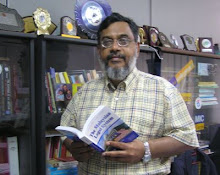
Summary Report of the Roundtable Discussion prepared by Datuk Dr Denison Jayasooria which was presented at the end of the RTD on Oct 30, 2008. Feedback please email denisonjayasooria@gmail.com


Subscribe to:
Post Comments (Atom)


No comments:
Post a Comment