By Melati Mohd Ariff
(This feature article is the first of a five part series on the development, achievement and the life of Orang Asli).
KUALA LUMPUR, Sept 28, 2009 (Bernama) -- According to the statistics provided by the Department of Orang Asli Affairs (JHEOA), at present there are 141,230 Orang Asli in Peninsula Malaysia.
Pahang has the most number of Orang Asli totaling 50,792, followed by Perak with 40,856 and Selangor with 15,210.
The Orang Asli community is divided into three major groups - Senoi, Negrito and Proto Malays.
Under Senoi, there are six sub groups namely the Temiar, Semai, Jahut, Che Wong (Pahang), Semoq Beri and Mahmeri. Many of these sub groups can be found in Central Perak, South Perak, Pahang and Selangor.
As for the Negrito, there are six sub groups - Kensiu, Kintaq, Jahai, Mendriq, Bateq and Lanoh. These sub groups can be found at the northern part of the Peninsula namely in Kedah, North Perak, Kelantan (Gua Musang) and Ulu Terengganu.
The Proto Group consists of six sub groups - Temuan, Jakun, Semelai, Orang Kuala, Orang Seletar and Orang Kanaq. Many of them can be found in Johor, Melaka, Negeri Sembilan, South Pahang and part of Selangor.
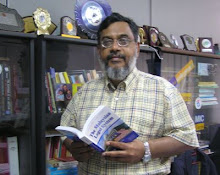
However, JHEOA's Director General Mohd Sani Mistam pointed out that the Orang Asli demography is increasingly changing with time.
"The Orang Asli today have spread out due to their success in the employment, skills and entrepreneurship," he told Bernama during an interview at his office at Wisma Selangor Dredging here recently.
Available data shows that 36.9 percent of the Orang Asli live in the interiors, 62.4 percent in semi urban areas and 0.7 percent in towns.
THE DEPARTMENT'S ROLE
JHEOA's role to empower the socio-economic development of the Orang Asli became more significant under the Seventh Malaysia Plan (1996-2000), Eight Malaysia Plan (2001-2005) and the Ninth Malaysia Plan (2006-2010).
JHEOA has come a long way since its inception in 1954. It was initially known as the Orang Asli Department (JOA) and it adopted the current name on 16 Sept, 1963.
The department was under the Ministry of Home Affairs since its inception but since 2001 JHEOA has been under what is now known as the Rural and Regional Development Ministry.
The initial goal of the department is to ensure that the Orang Asli remain free from the communist propaganda as the jungles which they live in is also the communist hideouts.
"The government has never ignored the welfare of the Orang Asli community. Changing their ways can only be done at the right time and the right place. When the communist threat was real, we had difficulties in providing physical development for the Orang Asli villages," noted Mohd Sani.
When the communist threat ended, JHEOA, he said, was entrusted with the role of integrating the Orang Asli with the rest of the Malaysian society.
The effort is seen pertinent in preventing the Orang Asli from being stereotyped as those who are left out, indolent, filthy and dowdy.
Mohd Sani pointed out that though many Orang Asli suffer from low esteem, the younger generation have been able to overcome this.
"There is also greater integration through mixed marriages with other communities and they are no longer shy in communicating with others.
"This is the testament that our efforts for a more systematic development has been accepted by the community. This is the positive change that we have been hoping for," he elaborated.
CHANGE IN MINDSET
The Orang Asli who were once known as the jungle nomads, are slowly making a transition from their traditional way of life to a more contemporary one.
Their dependence on the forest resources is also increasingly waning. Many have opted for employment or work in their own farms.
Mohd Sani noted that on the whole the development that the Orang Asli are undergoing today is in line with the phases of development planned by the government.
One of the biggest success recorded by the department is in reducing hardcore poverty among the Orang Asli.
"At the beginning of the Ninth Malaysia Plan, we had 13,945 poor households (earning RM720 and less). From this figure 9,003 of the households are hardcore poor (earning RM420 and less).
"As at April 30, 2009, the number of poor households went down to 4,939 while the hardcore poor went down to 1,810," he said adding that the figure is a great achievement when compared with the 19,433 poor Orang Asli households recorded under the Seventh Malaysia Plan.
JHEOA has taken several steps to eradicate hardcore poverty among the Orang Asli including providing them with housing where 14,082 units constructed so far.
Apart from this, JHEOA also provides basic amenities like village roads, water and power supply. So far 513 Orang Asli villages from the total of 876 villages have decent access roads.
Aid is also given to develop new land for rubber and palm oil cultivation, apart from entrepreneurial guidance and assistance for cash crops like water melon, banana and sweet potato.
HEALTH AND EDUCATION
As explained by Mohd Sani, every Orang Asli development programme emphasises on quality of life including health and education.
Regarding health, through the cooperation between JHEOA and the Ministry of Health, many health programmes are being implemented at the Orang Asli settlements, regardless in the suburbs or deep in the interior.
Speaking on health, he said, apart from a JHEOA run hospital in Gombak, there are five transit centres, 753 treatment centres and two rural clinics set up specifically to cater for the Orang Asli's needs nationwide.
Apart from this, he said, JHEOA is also providing the "flying doctor service " in several rural locations like the Pos Gob in Gua Musang.
"Diseases like malaria, leprosy and tuberculosis were once synonymous with the Orang Asli but now diseases related to modern living like diabetes, hypertension, kidney problems and HIV is on the increase," noted Mohd Sani.
In the education aspect JHEOA works with the Education Ministry to boost the academic performance of the Orang Asli students at the primary and secondary level.
Considering the high dropout rates among the Orang Asli children especially in the secondary schools that accounts up to 35 per cent of the Orang Asli student population, JHEOA plans to establish more K-9 (comprehensive schools) at the Orang Asli villages.
The K-9 schools offer education from standard one to form three.
Explaining on the dropout rates, Mohd Sani noted that it happens due to several factors, among others the students no longer interested in studies, leave studies to get married, start working or follow their parents to look for jungle resources.
"Some even drop out because they do not want to leave their village. Most of the schools at the Orang Asli villages are primary schools and to continue at a secondary school they need to travel or live in hostel.
"This is why they choose to dropout. Due to this more K-9 schools will be opened. Among the locations identified are Gua Musang and Cameron Highlands," noted Mohd Sani adding that currently there is one K-9 school in Paloh Inai, Pekan, Pahang.
SKILL TRAINING
As for the Orang Asli youths who do not excel in education, they have the opportunity to undergo vocational courses at the Damansara Damai Training Centre.
Up to 2008, about 1,600 Orang Asli youths underwent training to repair cars and motorbikes. About 80 per cent of the trainees managed to gain employment or open their own workshop.
Meanwhile, the fairer sex of the Orang Asli can opt for the sewing or hairstyling course and up to 2008 a total of 331 Orang Asli girls underwent training in this two courses.
Looking at the academic performance, the Orang Asli can be proud of their children's achievement as 600 Orang Asli students have made their way to higher education institutions.
Many of the Orang Asli Undergraduates are under JHEOA's scholarship.
LIMITATIONS AND SOCIAL WOES
Though JHEOA has recorded many achievements, there are still many more issues relating to Orang Asli that need to be addressed.
Among others the land development programmes that involve ungazzeted Orang Asli settlements that require the respective state government's approval.
Also the remotely located Orang Asli settlements hinder development programmes.
Like the other societies in this country, the Orang Asli are increasingly exposed to mainstream development and modern lifestyle and thus they are not exempted from social woes like drug addiction and free sex.
The Orang Asli living in the suburbs and towns are more affected by the social woes.
"Though this situation is worrying but it is still under control. The department through JHEOA at the state and district level will monitor and advise the community through the JHEOA's Mind Friendly Programme," added Mohd Sani.
He also touched on the liquor consumption among the Orang Asli, especially the older generation, which is hard to eradicate.
"Liquor is part and parcel of the Orang Asli's way of life.
"However, we still hold the awareness campaign on the dangers of consuming liquor and taking drugs with the cooperation of the National Anti Dadah Agency (AADK)," said Mohd Sani.
NO ONE IS LEFT OUT
The welfare of the Orang Asli remains the core of the Orang Asli Development programmes and a significant amount has been allocated for JHEOA for this purpose under the First Economic Stimulus Package.
Under the package, a total of RM65 million has been allocated for the household assistance programme that is expected to benefit 2,151 households.
Another RM24.9 million has been allocated for roads in 107 kampongs (RM14.5 million) and agricultural routes (RM10.4 million).
Apart from this, a total of RM200 million has been allocated to ensure all Orang Asli villages have clean water supply.
This year, the government continued with the RM20 million special allocation for the Orang Asli community that will be channeled through the Orang Asli Quality of Life Enhancement Programme.
In fact the Rural and Regional Development Minister Datuk Seri Mohd Shafie Apdal had ordered the formation of the Focus Group on last July to see to the woes faced by the Orang Asli. It covers five areas - education, amenities, health, economy and traditional knowledge.
Like what has been explained by Mohd Sani, under the 1Malaysia concept, there will not be any groups sidelined or left out. And for the Orang Asli community, the government has done a lot to enhance their socio-economic standing.
"If there is anyone left out, it is probably due to their reluctance to change their traditional way of life. Only five per cent of the Orang Asli community still carry on with their traditional way of life especially those living in Ulu Perak and Taman Negara, in Pahang," added Mohd Sani.
-- BERNAMA
Tuesday, September 29, 2009


Thursday, September 03, 2009
MALAYSIAN HUMAN RIGHTS DAY 2009
by SUHAKAM
THEME: “HUMAN RIGHTS IN MALAYSIA: THE LAST 10 YEARS”
DATE: 9 SEPTEMBER 2009
VENUE: RENAISSANCE HOTEL, JALAN AMPANG, KUALA LUMPUR
PROGRAMME
0830 - 0930 Registration
0930 - 1030 Welcoming by Datuk Dr. Chiam Heng Keng,Chairperson, Organizing Committee
Keynote Address by Tan Sri Abu Talib Bin Othman, Chairman, SUHAKAM
1030- 1050 Break / Refreshments
1050 - 1315 Panel Session
Panellist 1: Mr. Andrew Khoo, Co-Chairperson Human Rights Committee, Bar Council
Panellist 2: Mr. Ramdas Tikamdas, Former President of HAKAM
Panellist 3: Dr. Hajah Mehrun Siraj, Adjunct Professor, IIUM
Panellist 4: Mr. Steven Gan, Chief Editor, Malaysiakini.com
1315 – 1330 Closing Remarks, by Tan Sri Datuk Panglima Simon Sipaun
1330 End of Conference
THEME: “HUMAN RIGHTS IN MALAYSIA: THE LAST 10 YEARS”
DATE: 9 SEPTEMBER 2009
VENUE: RENAISSANCE HOTEL, JALAN AMPANG, KUALA LUMPUR
PROGRAMME
0830 - 0930 Registration
0930 - 1030 Welcoming by Datuk Dr. Chiam Heng Keng,Chairperson, Organizing Committee
Keynote Address by Tan Sri Abu Talib Bin Othman, Chairman, SUHAKAM
1030- 1050 Break / Refreshments
1050 - 1315 Panel Session
Panellist 1: Mr. Andrew Khoo, Co-Chairperson Human Rights Committee, Bar Council
Panellist 2: Mr. Ramdas Tikamdas, Former President of HAKAM
Panellist 3: Dr. Hajah Mehrun Siraj, Adjunct Professor, IIUM
Panellist 4: Mr. Steven Gan, Chief Editor, Malaysiakini.com
1315 – 1330 Closing Remarks, by Tan Sri Datuk Panglima Simon Sipaun
1330 End of Conference
Subscribe to:
Posts (Atom)