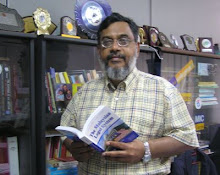
By Datuk Dr Denison Jayasooria
The recent incident at Brickfield on March 1, 2009 where a group of individuals went to make Police reports were dispersed with chemical-laced water and subsequently 17 people were arrested raises many concerns.
The important point to remember is that a Police station is a public place and any individual and group have the right to come and make reports. It is the duty of the Police to allow ordinary Malaysians to make their reports and their duty to investigate them.
Suhakam findings from three of its public inquiries (Kesas Highway, KLCC demonstration and Makota Cheras incident has established that excessive force was used in dispersing the crowd or in apprehending individuals. Therefore this action at Brickfields does not come as a surprise.
However what is of urgent concern is that the Police continue to justify their action and their refusal to recognize the differing position held by the general public on their conduct. Police action must be seen to be just and fair, impartial and in adherence to human rights principles, natural justice and the legal framework.
Public officials must demonstrate that their statements, thoughts, attitudes and actions are consistent with the basic principles of human rights and at the same time promoting national unity and integrations in Malaysia. Public officials especially the Inspector General of Police must go out of the way to ensure minority communities that the action by his officials are not directed towards them based on their ethnic or religious background.
There have been numerous cases pertaining to death in custody, Police shooting and Police action (excessive use of force to disperse the crowds) which are being interpreted as Police victimization of them on the basis of ethnicity and religion. Police in other jurisdictions especially in the United States, Britain and Australia have been found to have acted in ways which has revealed racist action. These Police institutions had to reform especially through the recruitment and promotion of Police officers from minority communities and introduction of clear guidelines on Police conduct to win public confidence especially among minority communities in those countries.
Doubts have been raised in the Malaysian context in this regard and therefore the Police must go out of the way to dispel these views. In a multi racial and multi religious Malaysia the Police must go out of the way to demonstrate that all their actions are in the best interest of all communities.
The Malaysian Police has a long and exemplary role in Community Policing and therefore my humble call is for the Police to strengthen this and foster closer ties especially with groups who are seeking their assistance. Civil society action and members can be a great asset to the Police force, they can be mobilized for action alongside the Police for common good.
The way individuals from a section of the Malaysian society who might call themselves ‘hindraf’ or ‘makal sakthi’ have been treated does not angust well for Malaysia. Malaysia has been in the forefronts of many national disputes of other countries such as the minority community in South Thailand or the Muslim minorities in the Philippines. However we have taken a very hard line in addressing the core concerns raised by a group of individuals who have the support of a majority of Indians in Malaysia as reflected in the voting pattern in the March 8, 2008 general elections.
Malaysian authorities have taken a hard line as reflected in the actions for example, the arrest of 30 over demonstrators, the detention under the ISA of five of the leaders, Police action in dispersing the crowds over many occasion and banning an unregistered movement. However all these actions have not addressed the roots of their grievances which are socio-economic, religious freedom and the right to be treated as equal citizens.
By all international standards these groups of individuals have launched a peaceful campaign. While many of their data and socio-economic analysis might not be accurate, the time has now come not for confrontation but for the state to approach it by entering into a dialogue with them. Wining heart and minds is an important strategy. Show them where they are wrong in their analysis. For example does the ISA detainee really need medical care. It is the role of the authorities to clarify this matter.
However public officials might also have to acknowledge weakness in the current system of delivery or acknowledge their mistake when what is being highlighted is true.
Current political representation through the federal government is unable to address these grassroots issues and concerns raised by this section of individuals and groups. Therefore new lines of direct discussions are essential to bring a clear settlement to them. Failure to do so will further racialise, radicalize and politicize the issues.
My humble plea to the Prime Minister, Deputy Prime Minister and the Inspector General of Police is to reach out to these groups and provide them an avenue to express their concerns and disagreement. At the same time the State must seek genuine strategies in addressing the root issues. Taking appropriate action on Police officers who have violated the rules must clearly be part of the agenda to restore public confidence.
---------------------
The views expressed here are purely his own and does not necessarily reflect the views of the institutions he is part of. However he holds a firm believe that all public institutions and officials must assess their conduct and thoughts based on the principles of protection of human rights and promotion of national unity.
His email contact : denisonjayasooria@gmail.com


Subscribe to:
Post Comments (Atom)


No comments:
Post a Comment