By Datuk Dr Denison Jayasooria
The recent events relating to the death of Kugan Ananthan while in Police custody has revived public concern and outcry over the ways Police carry out its investigation especially the methods used in interrogation of suspects.
Death in custody further complicates the situation and in this case the family, community and general public have lost confidence in the independence and neutrality of police to investigate such deaths. the investigation team. There are therefore calls for an independent enquiry panel to determine the cause of death and recommend appropriate action by the State.
It is often thought that the Police have developed a 'culture of practice' which is characterized by one of "arrest first and question later", extensive use of remand provisions for questioning suspects, allegations of use of force in extracting confessions and major issues pertaining to death in custody and weakness in inquest procedures.
All these issues and concerns are well documented in the report of the Royal Commission to enhance the operations and management of the Royal Malaysian Police which was released on 29 April 2005.
In addition the Human Rights Commission of Malaysia annual reports and the inquiry findings bear testimony to the fact that in the cases investigated by Suhakam, like the KLCC incident (May 28, 2006) and the Mahkota Cheras incident (May 27 2008). The findings showed that the Police had resorted to excessive use of force in dispersing the demonstrators in the first case and in the second in apprehending the driver of a vehicle in question.
These unprofessional Police conduct and heavy-handed action was carried out in the period subsequent to the release of the Royal Commission report. This raises major concerns to the way the Police, enforcement agencies and relevant Ministries respond to independent panel findings.
These panels were not established by civil society but were appointed by the Malaysian King on the advice of the Prime Minister with allocation of public funds. Why are these findings not taken up seriously? Why are these not implemented? If these were it could help prevent the reoccurrence of similar problems in the management of a crisis such as allegations of excessive use of force, abuse of power and death in custody.
It is when such incidences are not addressed promptly in a transparent and independent manner that there is a corresponding loss of public confidence. The danger is that the incident could degenerate and be racialized, politicized and radicalized by certain quarters. This must be avoided at all cost and public confidence in national leaders, the judicial and structural process should be restored in a satisfactory just and fair manner based on fundamental human rights for all human being.
By stating the issues pertaining to the unprofessional behavior of the Police does not mean that every Police official behaves in this form or that the public is unappreciative of the sacrifices made by Police personal in the course of their duty. However it must be noted that Police officials will be held accountable for their actions and there must be a collective commitment in ensuring that professional practice in accordance to human rights principles is maintained. These must be observed by all rank and file of the Police service.
The Royal Police Commission Report (2005) addresses some of the main concerns pertaining to death in custody and the related issues in this regard through proposed legislative and procedures changes. These include amendments to the Criminal Procedure Code (CPC) pertaining to the rights of person arrested and duration of remand for investigation as in Section 28 and 117 of the CPC. This arose as the Royal commission received many complaints related to alleged abuses by the Police. Some of these sections were amended by Parliament in 2006 and 2007.
In addition the Royal commission proposed a Code of Practice relating to the arrest and detention of persons. These include 24-hour camera surveillance and independent custody officer who will be responsible for the welfare and custody of detainees.
With specific reference to death in custody the Royal commission report included the documentation of 76 cases of death in Police custody between 2000 and 2004. It was noted that in a majority of these cases no inquest was conducted although it would have been preferrable for the Magistrate pursuant to section 334 of the CPC to have ordered an inquest. (*s 334 - is not mandatory - only if the Magistrate thinks it is expedient to do so i.e. the Magistrate's discrestion).
The Royal Commission concluded that "the current provisions for inquiry into deaths in police custody in the CPC are not sufficiently rigorous and do not provide for a transparent and accountable process". Therefore a number of sections of the CPC were recommended for amendment especially Sections 331, 332, 333, 334, 335, 337 and 338.
Some major amendments proposed are:-
To inform Magistrate and Government medical officer immediately of death
Magistrate to immediately examine the body of the deceased 'in situ'
Police to submit sudden death report to Magistrate immediately ie within one week
Post mortem report must be completed by Government Medical officer within 24 hours upon receiving the report.
Immediately inform the family of death of the suspect and the family be allowed to be present at the post mortem
Magistrate to convene the inquest immediately or within one month of receiving report of death
Family of deceased to be allowed to be present at the inquiry
It is important to note that in light of public interest and the suffering faced by families there is an urgent need for our law makers to revisit the Royal Police Commission Report and also make specific amendments to the CPC. This will provide the check and balance on death in custody cases. A stronger judicial role might be necessary to address the current weaknesses in restoring public confidence in the system.
A major section of the Royal Police Commission Report is Chapter 8 entitled Enhancing Investigative Policing. At the heart of any form of Police abuse pertaining to questioning suspects is the investigative competencies of Police officers.
The old style of questioning was to beat up a suspect till he confesses. This is a practice carried out by Police in many countries for a long period of time as has become a dominant practice.
The recent film 'Slumdog' contains various forms of Police brutality and torture methods in India including scenes of beating, using electricity shock methods and tipping the face into water.
Police officials in advanced countries that advocate human rights principles like the United States, United Kingdom and Australia have also been accused of using excessive force.
However, today in modern societies all over the world today a higher professional standard is now required in compliance with Human Rights principles especially in the way suspects are arrested, treated and questioned.
The Royal Police Commission made a number of suggestions pertaining to improving professional practice in investigation. These include:-
Adoption of proactive investigation,
Improved training for investigation officers,
Effective supervision through case management,
Greater use of scientific and technical aids in investigation and
Early involvement of public prosecutors in Police investigation
In the long run the real change required in the improvement of the way the Police carry out their duties is to enhance their professional standing. This must be our priority and these standards cannot be compromised. It is therefore the responsibility of every Malaysian to ensure that our Police force is respected for their sacrifice and service to the nation.
I do not think we need to reinvent the wheel on these matters as much work has already been undertaken by independent commissions.
Four suggestions in this connection might be relevant:-
First, that Parliament must restudy the findings of the two Royal Commissions that were established on various aspects pertaining to the Police and study also the Suhakam annual and inquiry reports pertaining to the Police and ensure its speedy implementation.
The Cabinet and the Ministry for Home Affairs & Internal Security must take a lead role in this matter. The formation of these commissions and appointment of the individuals had the full endorsement of the Cabinet and therefore the independent views must be recognized
Second, that Parliament should establish a Parliamentary Select Committee which can review all the relevant sections of the CPC and strengthen the provisions for independent and transparent mechanism pertaining to death in custody especially the role of the magistrate in Section 334 of the CPC
Third, that the Independent Police Complaints and Misconduct Commission (IPCMC) as proposed by the Royal Commission be established without any delay.
Fourth, that the Ministry of Home Affairs & Internal Security prepares a White paper and table in parliament on the death in custody cases (between 2000 and 2008) with details as provided by the Royal Commission Report (2005) and status review of inquest and decisions. This disclosure will provide a balanced view on the matter then currently perceived through media coverage.
----------------
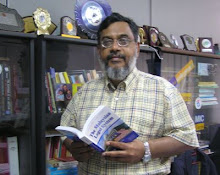
Datuk Dr Denison Jayasooria was a former member of the Royal Commission to Enhance the Operation and Management of the Royal Malaysian Police which was established in 2004). He is currently a member of the Malaysian Human Rights Commission. He is also a Principal Research Fellow of the Institute of Ethnic Studies, Universiti Kebangsaan Malaysia.
Views expressed in this article are his personal views and does not reflect the official position of the organizations he is currently associated with.
He can be contacted by email at denisonjayasooria@gmail.com


Subscribe to:
Post Comments (Atom)


No comments:
Post a Comment