By Casey McMechan (Malaysiakini)| May 29, 09 12:19pm
Progress of human rights in Malaysia must begin with the immediate implementation of the Enforcement Agency Integrity Commission bill (EAIC), which set out procedures and guidelines on how enforcement is to be conducted, including investigation into complaints of misconduct and abuse of power.
This was one of the major points that was highlighted by Dr Denison Jayasooria, commissioner of Human Rights Commission of Malaysia (Suhakam).
He was one of the guests invited by Amnesty International to launch its 2008 annual report at the Shah Village Hotel in Petaling Jaya yesterday.
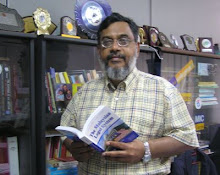
"The EAIC should be the number one priority for Najib," said Denison (right), referrring to Prime Minister Najib Abdul Razak.
"We call for a selective committee to be put together to implement the bill."
The Malay name for EAIC is Suruhanjaya Integriti Agensi Penguatkuasa, or Siap.
The EAIC, which covers 21 government agencies, is a new body originated from a proposal for an Independent Police Complaints and Misconduct Commission (IPCMC).
It was mutated to a weaker Special Complaints Commission (SCC) after the government back-pedalled on the concept.
The powerful IPCMC was recommended by a royal panel of inquiry on police operations to wipe out corruption and abuse of power in the police force.
The Amnesty International (AI) 2008 annual report's section on Malaysia outlined major concerns regarding detention without trial, freedom of expression and religion, excessive use of police force, migrants' rights, discrimination, and the death penalty.
Specifically, the report expressed alarm over the detention of bloggers under the Sedition Act, the use of the PPPA to control newspaper content, 22 death sentences, and ten additional arrests made under the ISA (there are currently over 50 detainees held under the ISA).
Among the high-profile detainees nabbed under ISA in 2008 included DAP MP and Selangor exco Teresa Kok, controversial blogger Raja Petra Kamaruddin and Sin Chew Daily journalist Tan Hoon Cheng.
No change
When asked to comment on the state of human rights in Malaysia compared to previous years, campaign coordinator K Shan stated: "There is no change from the previous years. If anything, in the past few months, things have taken a turn for the worse."
He also mentioned that AI does not rank from year to year or benchmark their progress.
Joseph Paul, chairperson for AI stated that 2009 will mark a change in focus for AI from civil and political rights towards economic socio-cultural rights with poverty being a focal point.
"Underlying the economic crisis is an explosive human rights crisis," he (left) added.
AI Secretary General Irene Khan, in a press release, claimed that the "economic downturn has aggravated abuses, distracted attention from them and created new problems." She also said that human rights "are being relegated to the back seat."
Demand Dignity
Joseph Paul also used the press conference to launch the Amnesty International campaign dubbed ‘Demand Dignity', a six-year plan that would concentrate on three issues of concern: Maternal mortality, slums, and corporate accountability.
"Our overall goal is to end the human rights violations that keep people poor."
Over half a million women die each year from pregnancy related complications, 95 percent of these are poor and come from less developed countries.
The global slum population is growing at an alarming rate with some projections suggesting that by 2030, two billion people will be living in slums.
In the extractive industries such as logging and mining, projects are often undertaken without adequate assessment of the potential impact on human rights, including environmental and social impacts.


Subscribe to:
Post Comments (Atom)


No comments:
Post a Comment