EDITOR, NEWS DESK
FOR IMMEDIATE RELEASE
PRESS STATEMENT
SUHAKAM: EXCLUSION FROM WELFARE AND POVERTY ERADICATION
PROGRAMMES IS A HUMAN RIGHTS VIOLATION
Siti Nurbaiyah has effectively written an article of the practical realities and difficulties faced by urban poor families in Kuala Lumpur. Her story in the new straits times (page 22) on 18 September 2008 highlighted the shocking finding of how 30 hardcore poor families in Taman Sentul Utama have not been able to access welfare assistance either through religious institutions or through the Department of Social Welfare. This is shocking especially when the federal government has made poverty eradication its number one priority. In addition, the Prime Minister has set the target of zero hardcore poverty by 2010.
There is a major gap between policy makers, service delivery and implementation institutions and the very poor at the bottom of society. While we might have impressive statistics or targets, at the ground we see a tremendous contrast. The poor are alienated and distant from the very institutions that were established to resolve their problems.
The poverty line income or income measure for hardcore poor and poor is unrealistic. The family of Rosnaini Abu Hassan whose only source of income is from her son, who earns RM850, is statistically non-poor and definitely not hardcore poor. But look at their predicament. Their house rent alone comes to RM450. They have an elderly mother who is 88 years old and an 18 year old son who is disabled.
By official government statistics, they are non-poor but in reality they are very poor in an urban environment with increasing prices and cost of living.
This is a similar problem faced by many other families who are with low income in urban areas. Their lives are hard and often, the opportunity to build their capability and capacity is not there. There are similar cases not just among poor Malay Muslims but also among many displaced plantation workers who are Hindus and Tamil. Both groups of communities are among the urban poor struggling to survive in a modern city like Kuala Lumpur.
But central to all this is why are these families unable to access the Department of Social Welfare for direct assistance or unable to access poverty eradication programmes for the urban poor? Access and inclusion are the cornerstones of empowering the poor and fundamental to a human rights approach. It is not through hand outs but a way out for the families so that they can break the cycle of poverty and share the rich quality of life that a sizable section of Malaysian society enjoys. Why are the requests from the poor not heard or entertained? Is there some form of discrimination because they are poor or powerless? Why is this so when there is so much funds being set aside both by the public and private sector.
Therefore, SUHAKAM calls on the relevant public sector agencies, especially the Department of Social Welfare and the Social Development Section of the Kuala Lumpur City Hall (DBKL), to review this situation and ensure that through effective delivery and implementation these poor families at Taman Sentul Utama are not further marginalised from development. Development is a fundamental human right and the poor must be given opportunities to enhance their economic and social rights.
SUHAKAM also calls on the government to immediately establish a taskforce especially in the urban areas which are under the purview of local governments to identify the poor and ensure that the poor have access to a better quality of life.
In addition SUHAKAM calls on the Economic Planning Unit to review the poverty line income and methodology in identifying the real poor. In addition to income measure, other qualitative or quantitative indicators must be used to ensure greater inclusion and access especially to the suffering sections of our society, which ever ethnic, religious or linguistic group. We must establish fair and equitable mechanisms in addressing the root issues and concerns of the urban poor in Malaysia.
A team from SUHAKAM (Economic, Social and Cultural Rights Working Group (ECOSOC)) will visit Taman Sentul Utama sometime next week and would discuss with some of the residents on the reasons for their inability to access the services of the Department of Social Welfare and poverty eradication programmes meant for the urban poor. We would contact the local residents and we hope to go to the ground and study the situation of why they are unable to access these provisions. We will then make appropriate recommendations to all the relevant agencies and departments concerned.
…END…
“HUMAN RIGHTS FOR ALL”
Statement by
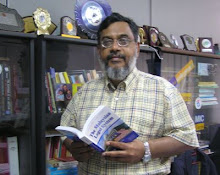
DATUK DR. DENISON JAYASOORIA
Chairman of the Economic, Social and Cultural Rights Working Group (ECOSOC)
Human Rights Commission of Malaysia
18 September 2008


Subscribe to:
Post Comments (Atom)


No comments:
Post a Comment